Anyone who has been told their blood pressure is high has been handed the same list: less salt, more exercise, lose some weight, drink less, sleep better, worry less. It is sound advice, and it is also completely impossible to act on all at once.
Worse, when people do attempt all of it in the same fortnight, two things usually happen. The changes are too demanding to sustain past a month, and if the numbers do move, there is no way of knowing which change did it. So when life gets busy and something has to go, you have no idea what you can safely drop.
There is a calmer way to approach this, and it uses the monitor you already own. Instead of guessing, you can find out which changes move your numbers, and quietly stop doing the ones that do not.
Why one change at a time works better
Blood pressure responds differently in different people. Some people are noticeably salt-sensitive and see a real drop when they cut back. Others barely shift. Some see more benefit from regular walking than from anything else. There is no way to predict which group you are in from a leaflet.
Testing one change at a time takes longer on paper, but it produces something a general list never can: a short, personal set of habits that you know are doing work. That is far easier to stick with for years, which is the actual goal.
Step one: get a baseline you can trust
Before changing anything, you need to know where you are starting from. A single reading will not do it.
- Measure for seven consecutive days.
- Twice a day: once in the morning, before breakfast and before taking blood pressure medication, and once in the evening.
- Two readings at each sitting, a minute or two apart, after sitting quietly for five minutes.
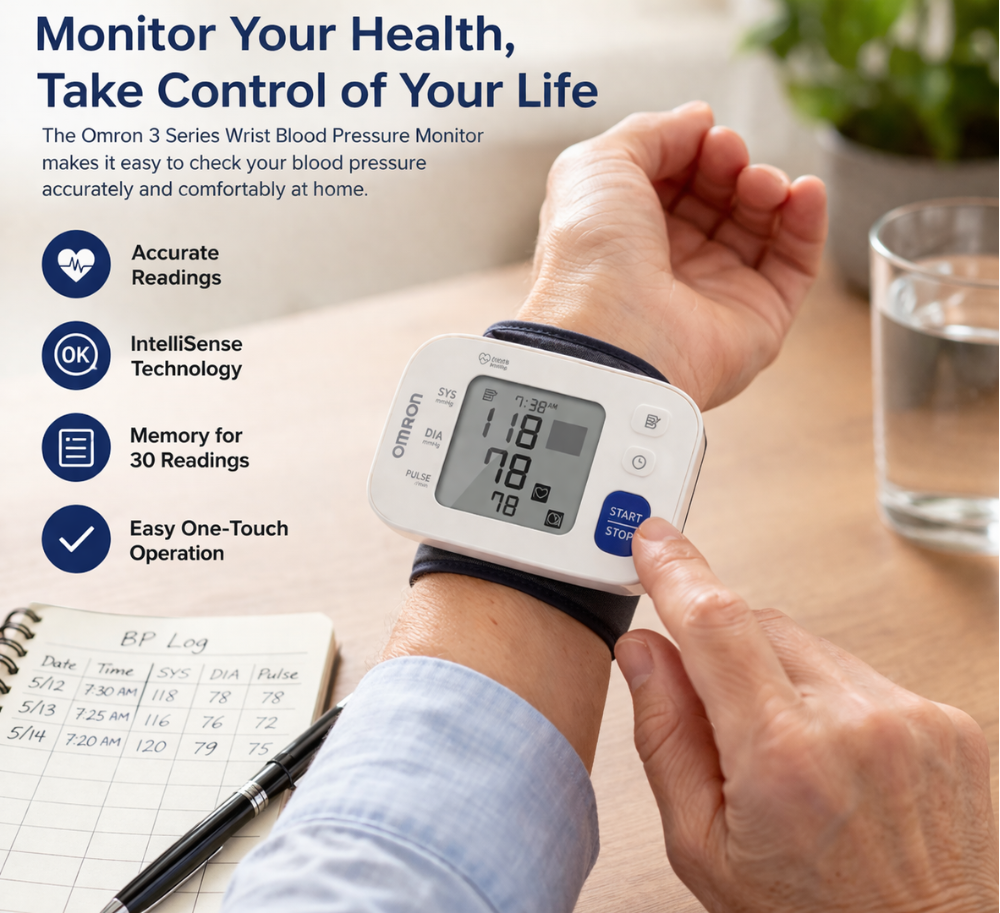
- Write down every number with the date and time. Do not leave out the ones you dislike.
- Discard day one entirely. First-day readings tend to run high while you settle into the routine.
- Average everything that remains. That average is your baseline.
Your technique has to be consistent, or you will end up measuring your posture rather than your progress. If you have not reviewed the basics recently, our guide to taking accurate readings at home covers cuff fit, positioning and timing.
Step two: choose one change and commit for six weeks
Pick the change that looks most realistic for your life right now, not the one that sounds most virtuous. A modest change you actually do beats an ambitious one you abandon in week two.
Give it a full six weeks. Some changes show up within days; others take a month or more. Six weeks is long enough to see most effects and short enough to stay interested.
During those six weeks, keep everything else as close to normal as you can. That includes your medication, which you should not adjust or stop on your own under any circumstances.
Changes worth testing, and what to expect from each
Cutting back on salt
Most dietary salt comes from processed and pre-prepared food rather than the salt cellar, so the highest-yield move is usually swapping a few packaged staples: bread, sauces, tinned soup, cured meats, stock cubes and ready meals. Read labels for sodium or salt per 100g rather than per serving, since serving sizes are not comparable between products. If you are salt-sensitive, this is often the change that shows up fastest.
Regular walking or other steady activity
Consistency matters more than intensity. Several moderate sessions a week, spread across the week, tend to do more than one heroic weekend effort. If mobility is limited, seated exercise and short frequent walks still count. Ask your clinician what level of activity is appropriate for you before starting something new.
Reducing alcohol
For people who drink regularly, cutting back is one of the more reliably effective changes, and the effect often appears within a few weeks. Track what you actually drink for a week first; most people underestimate.
Losing a modest amount of weight
This one is slow, and six weeks may not be enough to see much. It is worth pursuing for many reasons, but it is a poor candidate for a short test. If you choose it, plan for a longer review period.
Eating more potassium-rich foods
Vegetables, fruit, beans and unsalted nuts. Important caution: if you have kidney disease, or take certain blood pressure medicines or potassium supplements, increasing potassium can be unsafe. Check with your clinician or pharmacist before making this one of your experiments.
Improving sleep
Poor or broken sleep affects blood pressure, and untreated sleep apnoea in particular is strongly linked to readings that resist treatment. If you snore heavily, wake unrefreshed, or have been told you stop breathing in your sleep, that is worth raising with your clinician rather than treating as a lifestyle tweak.
A regular relaxation practice
Slow breathing, meditation or gentle yoga. Effects vary a great deal between individuals, which is exactly why testing it on yourself is more informative than reading about averages.
Step three: re-measure and compare
At the end of your six weeks, repeat the baseline process exactly: seven days, twice daily, two readings each time, same monitor, same arm, same times of day. Discard the first day again, and work out the new average.
Now compare averages, never individual readings. Two single readings taken six weeks apart tell you nothing at all.
Some honest caveats when you interpret the result:
- Season matters. Readings often run higher in cold weather. A test that spans a change of season is harder to read.
- Illness, pain and poor sleep during either measuring week will distort that week's average.
- New medications, including over-the-counter ones such as decongestants or some anti-inflammatory painkillers, can shift the numbers independently of your change.
- A small difference may just be noise. If the two averages are close, treat the result as inconclusive rather than as failure.
Our article on why blood pressure readings vary goes into more detail on separating a genuine trend from normal fluctuation.
Step four: keep, drop, or move on
- Clear improvement. Keep the change permanently. You have found something that works for your body.
- No change. That is genuinely useful information. Drop it if it was burdensome, keep it if it is easy and good for you anyway, and test something else.
- Inconclusive. If the change was easy to live with, run it for another six weeks before deciding.
Then choose the next change and repeat. Over a year you can honestly test six or seven things, and finish with a short list of habits you have personally verified rather than a long list you feel guilty about.
What this approach is not
This is a way of prioritising lifestyle changes. It is not a substitute for treatment, and it is not a way of deciding whether you still need your medication. Blood pressure medicines are often what is keeping your readings in a safe range in the first place, and stopping or reducing them without medical supervision is genuinely dangerous. If you are hoping to reduce medication, that is a legitimate goal and a conversation to have with your clinician, backed up by your log.
It also does not replace the practical business of living with high blood pressure day to day. For handling meals out, work pressure, travel and illness, see living with high blood pressure day to day.
Bringing your results to your clinician
Two dated averages, six weeks apart, with a one-line note on what you changed, is a genuinely valuable thing to hand over. It is far more useful than a verbal impression, and it lets your care team make decisions based on your ordinary life rather than one reading taken in a consulting room. For a straightforward way to structure that record, see how to log home readings and share them with your care team.
If your log shows averages consistently above your target, if readings have risen since a medication change, or if you feel dizzy or faint on standing, contact your clinician rather than waiting for the next scheduled review. If you need a reliable monitor or a replacement cuff to do any of this, our blood pressure range is a reasonable place to start.
This article is general information and is not medical advice. Your blood pressure target, which lifestyle changes are appropriate and safe for you, and any change to your medication must be confirmed with your own doctor, nurse or pharmacist.