Medical Disclaimer: This article is for informational and educational purposes only and does not constitute medical advice. Psoriasis is a chronic autoimmune condition that should be managed in partnership with a dermatologist or healthcare provider. If you have severe, widespread, or rapidly worsening psoriasis, seek medical evaluation. Do not discontinue prescribed treatments without consulting your doctor.
Psoriasis Relief: The Complete Guide to Best Treatments in 2026
Dana's Decade of Trial and Error
Dana, 47, was first diagnosed with plaque psoriasis at 36. The raised, silvery-scaled patches appeared first on her elbows and knees — classic locations — and then, during a stressful stretch at work, spread to her scalp and lower back. Over the next decade, she tried cortisone creams that helped short-term but thinned her skin with prolonged use, thick emollients that left grease stains on her sheets, and coal tar shampoos that smelled like a refinery. She cycled through products, gave up on some too soon, and kept others too long.
What Dana eventually learned — with the help of a good dermatologist — is that psoriasis management isn't about finding one magic product. It's about building a consistent, layered routine: the right moisturizing foundation, targeted active ingredients used correctly, trigger awareness, and realistic expectations about what over-the-counter products can and can't do. Once she had that framework, her flares became less frequent, less severe, and far less disruptive.
This guide is built on the same framework. Whether you're newly diagnosed or have been managing psoriasis for years, here's what the evidence actually supports — and how to find what works for you. When you're ready to stock your skin care routine, AllCare Store carries a wide selection of psoriasis-friendly skin care and wound care products with free shipping and a 30-day return policy.
What Is Psoriasis — and Why Does It Happen?
Psoriasis is a chronic autoimmune condition in which the immune system mistakenly accelerates the skin cell lifecycle. Normally, skin cells grow, mature, and shed over about 28–30 days. In psoriasis, this cycle is compressed to 3–5 days — cells pile up faster than they can shed, creating the characteristic thick, scaly plaques. The inflammation driving this process also causes the redness, itching, and discomfort associated with active lesions.
Psoriasis is not contagious, not caused by poor hygiene, and not simply dry skin. It is a systemic immune condition with a strong genetic component — about one-third of people with psoriasis have a first-degree relative with the condition. Environmental and lifestyle triggers (stress, infections, certain medications, alcohol, skin injury) can initiate or worsen flares, but the underlying predisposition is biological.
The most common type is plaque psoriasis (psoriasis vulgaris), which accounts for about 80–90% of cases. Other types include guttate (small, drop-shaped lesions), inverse (skin folds), pustular, and erythrodermic psoriasis. This guide focuses primarily on plaque psoriasis, which is what most people are managing with OTC products.
The Treatment Pyramid: From OTC to Prescription
Psoriasis treatment exists on a spectrum. For mild-to-moderate cases (less than 10% of body surface area affected), over-the-counter options combined with good skin care practices are often sufficient to manage day-to-day symptoms and reduce flare frequency. Moderate-to-severe psoriasis typically requires prescription treatments — topical corticosteroids, vitamin D analogues, retinoids, or biological therapies — and management by a dermatologist.
Understanding where you fall on this spectrum is important, because OTC products are not a substitute for medical care when your psoriasis is extensive, rapidly worsening, or affecting your quality of life significantly. That said, even patients on prescription biologics use the same moisturizing and barrier-support principles described below — good skin care is foundational regardless of what else you're doing.
The 5 Most Effective OTC Active Ingredients for Psoriasis
1. Salicylic Acid: The Scaling Remover
Salicylic acid is a beta-hydroxy acid (BHA) that acts as a keratolytic — it breaks down the protein bonds holding dead skin cells together, softening and removing the thick scale that accumulates on psoriatic plaques. This does two important things: it makes the skin look and feel better immediately, and it allows other topical treatments to penetrate more effectively by clearing the barrier of built-up scale.
OTC psoriasis products typically contain 1.8–3% salicylic acid. Prescription-strength formulations go higher (up to 6% or more), but OTC concentrations are sufficient for most mild scalp and skin applications. Salicylic acid shampoos (like those marketed for scalp psoriasis and seborrheic dermatitis) are particularly effective for the scalp, where scale removal is both cosmetically important and helps other treatments reach the skin surface.
How to use: Apply directly to plaques, leave on for the directed time (varies by product), then gently remove softened scale. Avoid applying to large body surface areas at once, as systemic salicylate absorption can occur. Do not use on broken or severely inflamed skin. Not recommended for children without medical guidance.
2. Coal Tar: The Oldest Effective Option
Coal tar has been used to treat psoriasis for well over a century, and it remains one of the few OTC ingredients with robust clinical evidence for psoriasis specifically. It works by reducing the abnormally rapid skin cell turnover that drives plaque formation, and has mild anti-inflammatory and antipruritic (anti-itch) effects as well.
OTC coal tar products are available in concentrations up to 5% (shampoos, creams, ointments, bath solutions). Prescription formulations can go up to 20%+. The main drawbacks are cosmetic: coal tar smells strongly and can stain fabrics and light-colored hair. Many patients use it at night on body plaques specifically to avoid daytime inconvenience.
Coal tar shampoos (0.5–2%) are particularly well-established for scalp psoriasis, used 2–3 times weekly as a leave-on treatment (applied, left for 5–10 minutes, then rinsed) or as a daily maintenance shampoo.
How to use: Apply to affected areas, allow to absorb (some coal tar products are designed to be left on; others rinsed off — follow product instructions). Wash hands after application. Avoid sun exposure on treated areas as coal tar can increase photosensitivity. Avoid use near eyes.
3. Hydrocortisone (1%): The Inflammation Reducer
OTC 1% hydrocortisone is a mild topical corticosteroid that reduces inflammation and itch. For psoriasis, it's most useful during active flares — particularly on the face, groin, and skin fold areas where stronger steroids are generally not recommended due to higher absorption rates and skin thinning risk. It's also useful as a short-term bridge while waiting for other treatments to take effect.
1% hydrocortisone is significantly weaker than prescription topical steroids (betamethasone, triamcinolone, clobetasol), which means its effect on thick plaque psoriasis is limited. Think of OTC hydrocortisone as a tool for controlling itch and mild inflammation on sensitive body areas, not as a primary plaque treatment for thick, established lesions.
How to use: Apply a thin layer to affected areas twice daily. Limit use to 2 weeks continuously without consulting a physician. Do not apply to the face for extended periods, and avoid occlusive covering without medical guidance. Do not use on open wounds or infected skin.
4. Moisturizers with Ceramides and Urea: The Foundation Layer
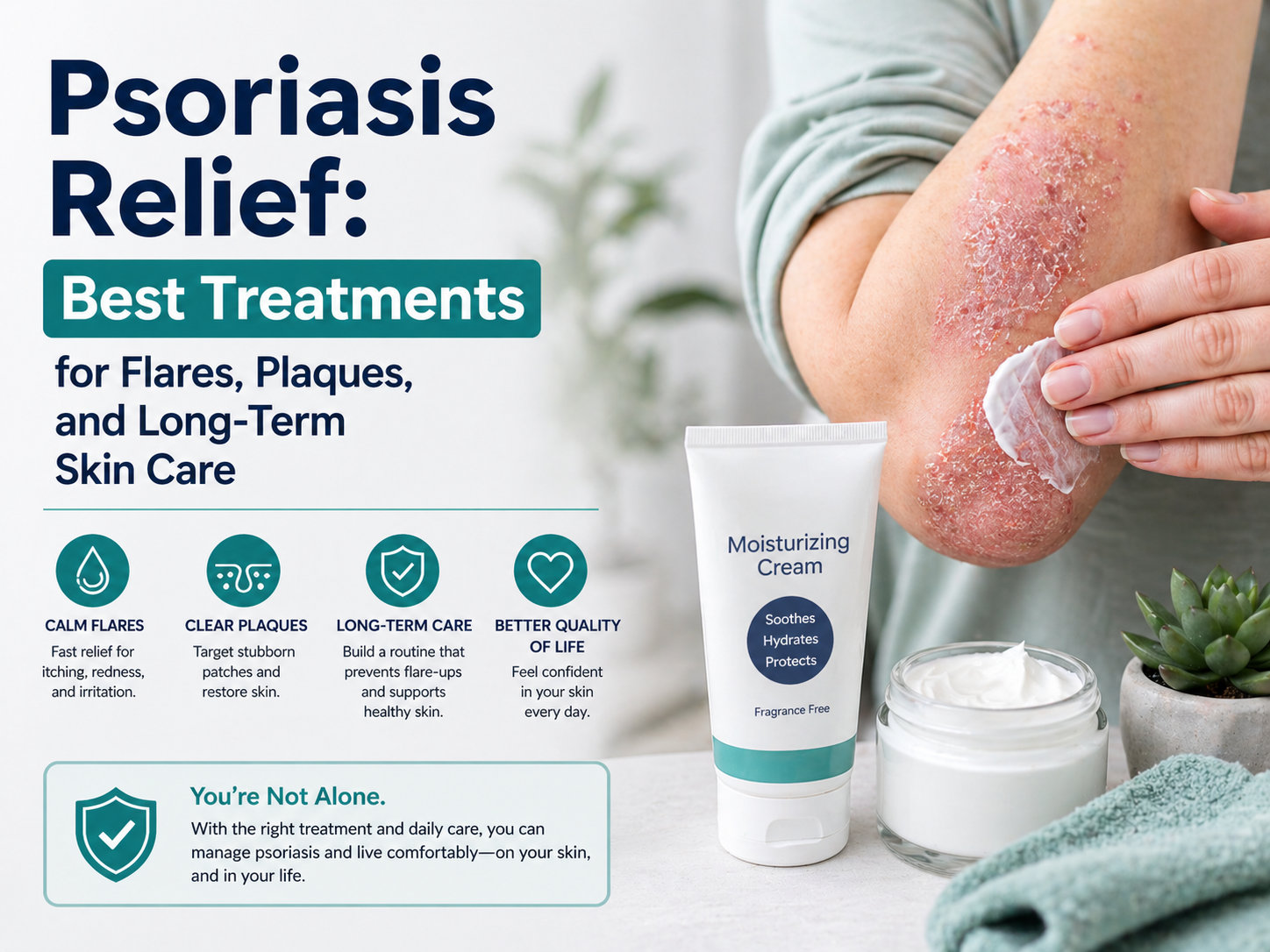
Moisturizers are not "just" comfort products in psoriasis — they are active components of management. Psoriatic skin has a significantly compromised skin barrier, with lower ceramide levels and higher transepidermal water loss than healthy skin. Keeping the skin well-moisturized reduces scaling, reduces itch, reduces fissuring and cracking (which can trigger the Koebner phenomenon — new plaques forming at injury sites), and extends the effects of other treatments.
The most effective moisturizers for psoriasis tend to contain:
- Ceramides (ceramide NP, AP, EOP): The primary lipids of the skin barrier — replenishing them helps restore barrier function
- Urea (5–10%): Both a humectant and mild keratolytic — helps hydrate and gently soften scale
- Glycerin: Powerful humectant that draws moisture into the skin
- Dimethicone or petrolatum: Occlusive agents that seal in moisture and reduce water loss
Ointments and thick creams outperform lotions for psoriasis because their higher oil content provides better occlusion. Applying moisturizer immediately after bathing (within 3 minutes, while skin is still slightly damp) significantly improves absorption and effectiveness — this is the "soak and smear" technique dermatologists commonly recommend.
5. Colloidal Oatmeal (1%): Anti-Itch Relief
FDA-approved as a skin protectant, colloidal oatmeal has demonstrated anti-inflammatory, antipruritic, and moisturizing properties in clinical research. It forms a protective film on the skin surface, helps normalize skin pH, and reduces the itch-scratch cycle that can worsen psoriatic lesions through the Koebner phenomenon. Colloidal oatmeal lotions, creams, and bath treatments are safe for all ages and body areas, making them particularly useful for itchy scalp or sensitive areas where stronger actives are inappropriate.
OTC Psoriasis Products Compared
| Product Type | Active Ingredient | Best For | Key Limitation |
|---|---|---|---|
| Salicylic acid cream/gel | Salicylic acid 1.8–3% | Scale removal; improving penetration of other treatments | Not for large body areas; avoid broken skin |
| Coal tar cream/ointment | Coal tar 0.5–5% | Reducing cell turnover; thick plaques on body | Strong smell; photosensitizing; stains fabrics |
| Coal tar shampoo | Coal tar 0.5–2% | Scalp psoriasis and seborrheic dermatitis | Smell; may discolor light hair |
| Hydrocortisone 1% cream | Hydrocortisone 1% | Itch, mild inflammation; sensitive areas (face, groin) | Weak for thick plaques; skin thinning with prolonged use |
| Ceramide-rich moisturizer | Ceramides, glycerin, petrolatum | Daily barrier support; reducing scale and itch | No direct anti-psoriatic effect; supportive only |
| Urea cream (5–10%) | Urea | Dry, thickened plaques; feet and elbows | Can sting on irritated or broken skin |
| Colloidal oatmeal lotion | Colloidal oatmeal 1% | Itch relief; all-over soothing; sensitive areas | Mild effect; best as complement to other treatments |
| Salicylic acid shampoo | Salicylic acid 3% | Scalp scale removal | Use with conditioner; can dry scalp with overuse |
Building Your Psoriasis Skin Care Routine
The Daily Routine (Maintenance)
The goal of daily maintenance is to keep the skin barrier as healthy as possible between flares. This is not the time for aggressive active ingredients — it's the time for consistency and protection.
Morning: Gentle, fragrance-free cleanser → pat (don't rub) dry → apply ceramide-rich moisturizer or urea cream within 3 minutes while skin is still slightly damp. On the scalp, use a gentle, sulfate-free or medicated maintenance shampoo.
Evening: If using coal tar or salicylic acid, this is when to apply them — before bed, under loosely fitting clothing. Follow with a generous layer of moisturizer over any areas not directly being treated.
During a Flare
When plaques are actively thickening and scaling: Start with scale removal (salicylic acid or coal tar product, 2–3x/week) before applying other treatments. Apply more frequently with occlusion (covering treated areas with plastic wrap or cotton gloves/socks overnight) to boost penetration — with your doctor's guidance. Increase moisturizing frequency. Avoid hot showers, which strip natural oils and worsen inflammation. Keep water temperature warm, not hot, and limit shower time to 5–10 minutes.
Scalp Psoriasis Specifically
Scalp psoriasis is one of the most common and most frustrating locations. A practical rotation: coal tar shampoo 2–3x/week as a leave-on treatment (5–10 min), alternating with a salicylic acid shampoo for scale removal when buildup is prominent, followed by a scalp-specific conditioner or oil to prevent dryness. Separate the hair and apply treatments directly to the scalp rather than the hair shaft for best effect.
Common Psoriasis Triggers to Avoid
Trigger management is as important as topical treatment. The most well-documented psoriasis triggers include:
- Stress: One of the most powerful triggers — stress hormones promote inflammatory cytokine release. Mind-body practices (meditation, progressive muscle relaxation) have modest but real evidence for reducing flare frequency.
- Skin injury (Koebner phenomenon): Scratches, cuts, sunburns, and even repeated friction can trigger new plaques in areas of damage. Protect psoriasis-prone skin from minor trauma.
- Infections: Streptococcal throat infections are a known trigger, particularly for guttate psoriasis. Treat infections promptly.
- Certain medications: Beta-blockers, lithium, NSAIDs, and antimalarials can trigger or worsen psoriasis. Discuss alternatives with your doctor if you're on these.
- Alcohol: Strongly associated with both triggering flares and reducing the effectiveness of systemic treatments. Reducing or eliminating alcohol intake can significantly improve psoriasis control.
- Smoking: A robust risk factor for psoriasis severity — smoking cessation is one of the most impactful lifestyle changes psoriasis patients can make.
- Cold, dry weather: Reduces ambient humidity and stresses the skin barrier. Increase moisturizing frequency in winter months.
When to See a Dermatologist
OTC products are appropriate for mild, stable psoriasis. See a dermatologist if:
- Psoriasis covers more than 10% of your body surface area
- Plaques are on your face, genitals, or hands (affects quality of life significantly and requires specialized treatment)
- You have joint pain or swelling (could indicate psoriatic arthritis, which affects about 30% of psoriasis patients and requires systemic treatment)
- OTC treatments aren't providing adequate control after 4–6 weeks of consistent use
- Psoriasis is significantly affecting your sleep, work, or mental health
- You develop signs of skin infection (increasing redness, warmth, pus, fever)
Prescription options have expanded dramatically in recent years. Biological therapies (IL-17, IL-23, and TNF inhibitors) now offer near-complete clearance for many people with moderate-to-severe disease. If you've been managing difficult psoriasis with OTC products alone, a dermatology consultation may reveal significantly better options than you're aware of.
Frequently Asked Questions: Psoriasis Treatment
What is the best OTC cream for psoriasis?
There is no single "best" OTC cream — the right choice depends on your symptoms and location. For thick, scaly plaques on the body, coal tar products and salicylic acid creams have the strongest evidence. For sensitive areas like the face or groin, 1% hydrocortisone or colloidal oatmeal products are safer choices. For daily maintenance and barrier support, ceramide-rich moisturizers or urea creams are foundational. Most dermatologists recommend a combination: a daily moisturizer as the base, plus targeted active ingredients (coal tar, salicylic acid) applied to plaques as needed.
Can psoriasis be cured?
No — psoriasis is a chronic autoimmune condition without a cure. However, it can be effectively managed, and many people achieve periods of complete or near-complete clearance with appropriate treatment. The goal is not elimination but control: minimizing flare frequency and severity, maintaining skin comfort and appearance, and preventing complications like psoriatic arthritis. Modern biological therapies have transformed outcomes for moderate-to-severe psoriasis, achieving clearance rates that were unimaginable 20 years ago.
How do I know if my skin condition is psoriasis or eczema?
Both psoriasis and eczema (atopic dermatitis) cause red, itchy, scaling skin, but they have distinct features. Psoriasis plaques tend to be well-defined with thick, silvery scales, and commonly appear on elbows, knees, scalp, and lower back. The skin is often raised. Eczema tends to appear in skin creases (inner elbows, behind knees), is often less distinctly bordered, and is more commonly associated with allergies and asthma. Psoriasis scale tends to be drier and thicker; eczema skin is often more weeping and oozing during flares. A dermatologist can definitively distinguish between them — correct diagnosis matters because some treatments differ between the two conditions.
Is coal tar safe to use long-term?
OTC coal tar (up to 5%) has been used therapeutically for over 100 years and is considered safe for long-term use at labeled concentrations when used as directed. Early concerns about carcinogenicity came from industrial coal tar exposure at far higher concentrations over decades — the FDA has reviewed the evidence and maintains OTC coal tar as generally recognized as safe and effective for skin conditions including psoriasis. Avoid applying to large body areas without medical guidance, use sunscreen on treated areas, and follow product label directions. As with any long-term topical therapy, periodic review with your healthcare provider is appropriate.
Does diet affect psoriasis?
The evidence is growing but not yet definitive. Some research suggests that an anti-inflammatory diet (rich in fruits, vegetables, whole grains, omega-3 fatty acids; low in processed foods, refined sugars, and red meat) may reduce flare frequency and severity. Gluten elimination helps people with psoriasis who also have celiac disease or gluten sensitivity. Obesity is a well-established risk factor for psoriasis severity, and weight loss in people with obesity can significantly improve psoriasis outcomes. Alcohol reduction has strong evidence for benefit. For most people, dietary changes are a useful adjunct to medical treatment — not a replacement for it.
What moisturizer ingredients should I avoid if I have psoriasis?
People with psoriasis should avoid moisturizers with: fragrances (a common irritant that can trigger flares), alcohol-based formulas (drying and irritating to compromised skin), harsh preservatives like formaldehyde releasers, and products with high concentrations of alpha-hydroxy acids during active flares. Look for products specifically labeled for sensitive skin or eczema/psoriasis, which tend to have simpler, gentler ingredient lists. Fragrance-free is more important than "unscented" — unscented products may still contain masking fragrances.
The Bottom Line: Consistency Is the Treatment
Dana's decade of trial and error came down to one insight that changed everything: psoriasis management rewards consistency far more than product shopping. The routine that works is the one you'll actually maintain every day — not the most aggressive regimen, but the sustainable one. A daily ceramide moisturizer plus targeted coal tar or salicylic acid on active plaques, combined with trigger awareness and reasonable lifestyle adjustments, can dramatically change the day-to-day experience of living with psoriasis.
And when OTC options hit their ceiling — as they eventually do for many people — knowing when to escalate to a dermatologist is just as important as knowing which cream to buy.
Browse AllCare Store's Skin Care collection and Wound Care products for psoriasis-friendly moisturizers, barrier creams, and skin treatment options. Questions? Our team is available at 1-888-889-6260, and we offer free shipping on qualifying orders with a 30-day return policy.
— The AllCare Store Team | AllCareStore.com