The Backpack Is Medical Equipment — Treat It Like It
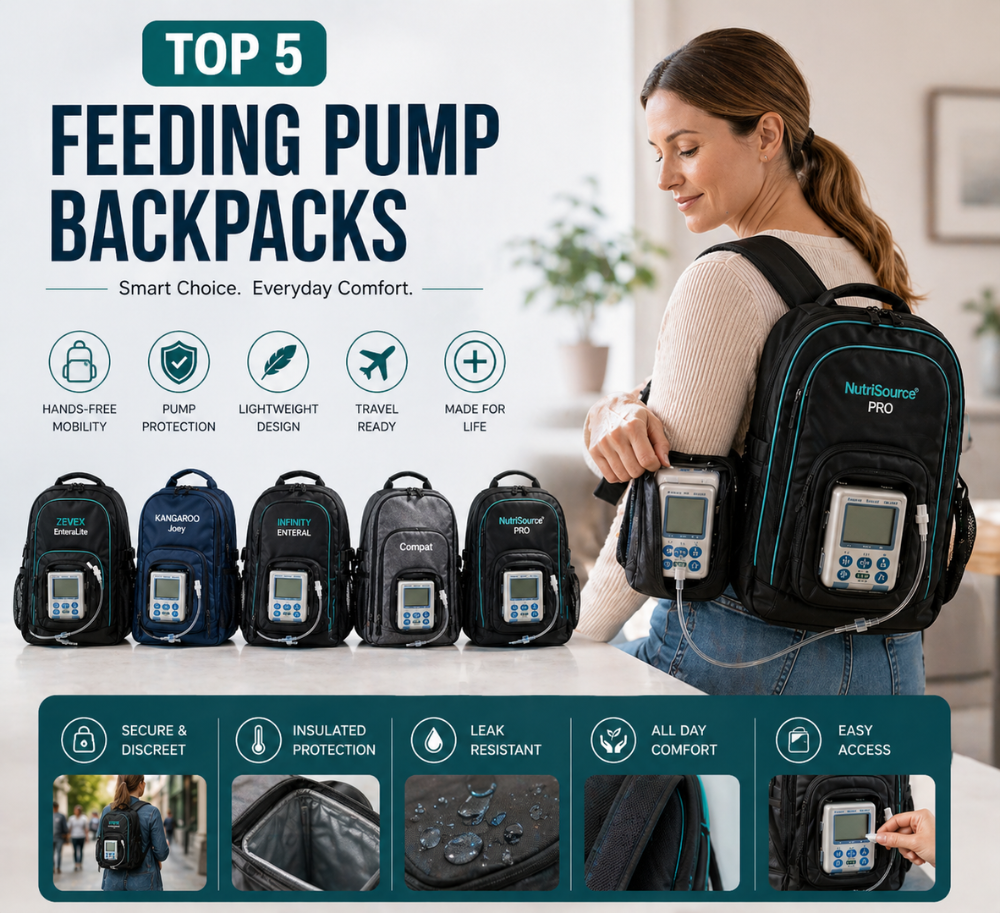
A feeding pump backpack does a deceptively hard job: it carries an electronic pump, a bag of nutrient-rich formula, and open tubing through school hallways, offices, cars, and airports — all while keeping everything clean enough to connect to a feeding tube. Formula is an excellent growth medium for bacteria, which means a backpack that never gets properly cleaned becomes the weakest link in an otherwise careful feeding routine. This guide is the care manual most backpacks never come with: the daily wipe-down, the weekly deep clean, tubing management, packing order, and the checklists that make school handoffs and air travel go smoothly.
If you are still choosing a bag, start with our feeding pump backpack buying guide; and if you are converting a regular backpack instead, our step-by-step backpack modification guide shows how. Everything below applies either way.
The Daily Routine: Two Minutes That Prevent Most Problems
At the end of each feeding day (or each school day), do a quick reset:
- Remove everything. Pump out, feed set out, ice pack to the freezer, trash out. Never leave a used feed bag or wet ice pack in the backpack overnight.
- Wipe the interior with a damp cloth and mild dish soap, or a manufacturer-approved wipe. Pay attention to the bottom seams where drips collect.
- Wipe the pump exterior following the pump maker's instructions — typically a barely damp cloth or approved disinfectant wipe. Never spray liquid directly at a pump or submerge it.
- Leave zippers open so the bag airs and dries fully overnight. Trapped moisture is where odor and mildew start.
- Do a ten-second inspection: check the strap stitching, the tubing port, and the pocket that holds the pump. Catching a fraying seam early is much cheaper than a dropped pump.
When Formula Spills Inside the Bag
Formula spills happen to everyone — a loose cap, an overfilled bag, a pinched line. Speed matters more than technique:
- Unpack immediately and get the pump clear of the liquid. Check the pump's ports and casing; wipe it down per the manufacturer's directions.
- Blot up the spill with paper towels — do not smear it deeper into fabric seams.
- Wash the affected area with warm water and dish soap. For wipeable linings this takes a minute; for fabric interiors, scrub gently, rinse the soap out, and blot dry.
- Dry the bag completely, open, ideally near moving air. Dried-in formula that was not rinsed out will sour within a day and the smell is very hard to remove later.
- If the spill soaked the insulation layer, do a full deep clean (below) — surface wiping will not reach it.
The Weekly Deep Clean
Once a week (or immediately after any major spill), give the backpack fifteen minutes:
- Empty every pocket — you will be surprised what accumulates: used syringe caps, crumbs, a forgotten extension set.
- Vacuum or shake out crumbs and debris from the main compartment and pockets.
- Wash the interior with warm soapy water and a soft cloth or brush, including the insulated compartment and the underside of the lid. Rinse-wipe with a clean damp cloth so no soap residue remains.
- Disinfect wipeable surfaces with an appropriate disinfectant wipe if your bag's lining allows it, especially after illness in the household.
- Check whether the bag is machine-washable. Some fabric backpacks tolerate a gentle cold cycle in a laundry bag with the frame panels removed — but only if the manufacturer says so, and never machine-dry. Air-dry fully, fully open, which can take 24 hours.
- Inspect hardware: run every zipper end to end, check buckles and sternum clips, and look at the tubing port grommet for sharp edges that could abrade a feed line.
- Wash reusable ice packs with soapy water and inspect them for leaks — a slow-leaking gel pack ruins insulation linings.
Feed sets, bags, syringes, and extensions have their own cleaning and replacement schedule prescribed by your care team — follow their guidance and your supplier's instructions rather than improvising, and keep spares stocked. You can find enteral feeding supplies in our Nutrition and Feeding Essentials collection.
Tubing Management Inside the Bag
Most on-the-go feeding problems — pump occlusion alarms, disconnections, leaks — are really tubing-routing problems. A few habits fix nearly all of them:
- Route the line through the bag's tubing port, not out of the main zipper, so the zipper never pinches the line. If your bag lacks a port, our modification guide shows how to add one cleanly.
- Leave a gentle service loop. Coil one loose loop of slack inside the bag before the line exits, so a tug on the outside pulls against the loop, not the pump connection or the feeding tube.
- No kinks, no tight coils. Sharp bends trigger occlusion alarms. The line should follow wide, lazy curves from bag to port to person.
- Secure the external run. A clothing clip partway along the line directs any accidental pull to clothing instead of the tube site.
- Keep the line off the floor when setting the bag down — hang the backpack on a chair or hook rather than dropping it, so the tubing never gets stepped on or rolled over.
- Check gravity and geometry after packing: the feed bag should sit upright with the outlet at the bottom, the line running downward to the pump without loops that trap air.
Packing Order: Ice Pack, Formula, Pump
Pack the insulated compartment in a consistent order so anyone — you, a partner, a school nurse — gets the same safe result:
- 1. Ice pack first, flat against the wall or base of the insulated compartment (frozen solid, wiped dry).
- 2. Formula next, in direct contact with the ice pack. Refrigerated, unopened, or freshly decanted formula holds temperature far better than formula that has already warmed up.
- 3. Feed bag upright, outlet down, clamps closed until you are ready to run the feed.
- 4. Pump in its own pocket, away from the ice pack — cold and condensation are not friends to electronics. Make sure its display and controls face the access window or opening.
- 5. Accessories in outer pockets: syringes, extension sets, adapters, tape, a small bottle of water for flushes, and a zip-top bag for used items.
Two temperature rules to anchor everything: follow your care team's guidance on hang time (open-system feed bags are typically limited to about 4 hours at room temperature), and when in doubt about how long formula has been warm, discard it. An insulated compartment with a good ice pack buys time; it does not suspend the rules.
The School or Work Handoff Checklist
When the backpack changes hands — to a school nurse, teacher, aide, or coworker — the goal is that nothing lives only in your head. Tape a card with the child's or user's name and this list inside the top flap:
- Pump charged (and charger packed if the day is long)
- Formula: correct type, correct volume, labeled with name, date, and time it was prepared
- Ice pack frozen and in place; note the time formula went into the bag
- Feed set primed or ready, clamps closed; spare set packed
- Flush water and syringes packed
- Written feeding plan: rate, dose, timing, flush amounts — as prescribed by the care team
- Emergency contacts and what to do for common alarms (occlusion, low battery, dose complete)
- Zip-top bag for used supplies coming home
- End-of-day: everything comes home, nothing stays in the bag overnight
Walk the receiving adult through one full setup in person at least once — a five-minute demonstration prevents most panicked midday phone calls.
TSA and Air-Travel Checklist for Enteral Feeding Gear
Enteral feeding equipment and formula are medically necessary items, and TSA screens them accordingly — but the process goes much faster when you arrive prepared:
- Formula is exempt from the 3.4-ounce liquid rule. Medically necessary liquids, including enteral formula and flush water, may exceed 3-1-1 limits. Pack them accessibly and declare them to the TSA officer at the start of screening; expect them to be X-rayed or inspected separately.
- Ice packs and gel packs are allowed when needed to cool medically necessary liquids — frozen solid is smoothest at the checkpoint.
- Carry everything on. Never check the pump or the formula for the trip's duration — checked bags get delayed, and cargo holds get cold. The feeding backpack generally counts as a medical device bag; many airlines exempt medical equipment from carry-on limits, but confirm with your airline before flying.
- Bring documentation: a physician's letter describing the feeding regimen and equipment, prescription labels, and the pump's user card if you have one. Rarely required, frequently useful.
- Consider TSA Cares. Calling the TSA Cares helpline at least 72 hours before travel can arrange assistance through screening for passengers with medical needs.
- Pack quantities for the trip plus a buffer — a common rule of thumb is roughly 50 percent more formula and supplies than the itinerary strictly needs, split between bags if traveling with a companion.
- In flight: a pump running a feed may be used onboard; tell the cabin crew it is a medical device. Plan feeds around boarding and takeoff where possible, and keep flush supplies within reach rather than in the overhead bin.
- On arrival: refrigerate formula promptly, refreeze ice packs, and do the daily wipe-down — airports are exactly where the bag picks up the most grime.
When to Replace the Backpack
Even a well-maintained bag wears out. Replace it when the interior holds a sour smell through deep cleans (formula has penetrated the insulation), when zippers or strap stitching fail, when the insulated compartment no longer keeps an ice pack cold for the hours you need, or when the pump pocket has stretched enough that the pump shifts in transit. If you are shopping, AllCare Store carries the Feeding Pump Backpack in Black and Gray — a McKesson bag with a 1200 mL capacity, a pump strap with a front easy-access pocket, and two separate pouches for different-sized solution containers. Compare more options in our buying guide, and browse feeding supplies in the Nutrition and Feeding Essentials collection. Free shipping on every order — questions at 1-888-889-6260.
Frequently Asked Questions
Can I machine-wash a feeding pump backpack?
Only if the manufacturer explicitly says so. Many bags have insulation, coatings, or structural panels that machine washing destroys. When permitted, use a gentle cold cycle with the bag empty and fully open, and always air-dry — never machine-dry. Otherwise, hand-wash with warm soapy water and a cloth.
How long can formula stay in the backpack?
Follow the hang-time and temperature rules from your dietitian or care team — commonly about 4 hours at room temperature for open-system feed bags, longer for sealed ready-to-hang systems. A frozen ice pack packed directly against the formula extends safe time, but when you are unsure how long formula has been warm, throw it out.
What is the most common cause of pump alarms on the go?
Tubing problems: a line pinched in a zipper, a kink from tight coiling, or an air-trapping loop between the feed bag and pump. Routing the line through a dedicated port, leaving one loose service loop, and packing the feed bag upright with the outlet down eliminates most alarms.
Medical Disclaimer: This article is for general informational purposes and does not replace instructions from your physician, dietitian, or enteral feeding care team. Always follow your prescribed feeding plan and your equipment manufacturers' cleaning directions.