Biotin has an unusual safety profile. It is one of the least toxic vitamins on the shelf — there is no established upper limit, and even very high doses rarely cause direct harm. And yet it is the subject of a formal safety communication from the US Food and Drug Administration, because of something most people taking it have never heard of: high-dose biotin can distort common blood tests badly enough to cause a wrong diagnosis.
This guide covers what the dose numbers on labels actually mean, the interactions worth knowing, the genuine side effects, and the lab interference issue in detail. For the background on who actually needs biotin at all, see our guide to biotin deficiency risk factors and signs.
Making Sense Of The Dose On The Label
The Adequate Intake for adults is 30 micrograms per day, rising slightly during breastfeeding. There is no full Recommended Dietary Allowance, because the evidence was not strong enough to set one. A varied diet typically supplies enough.
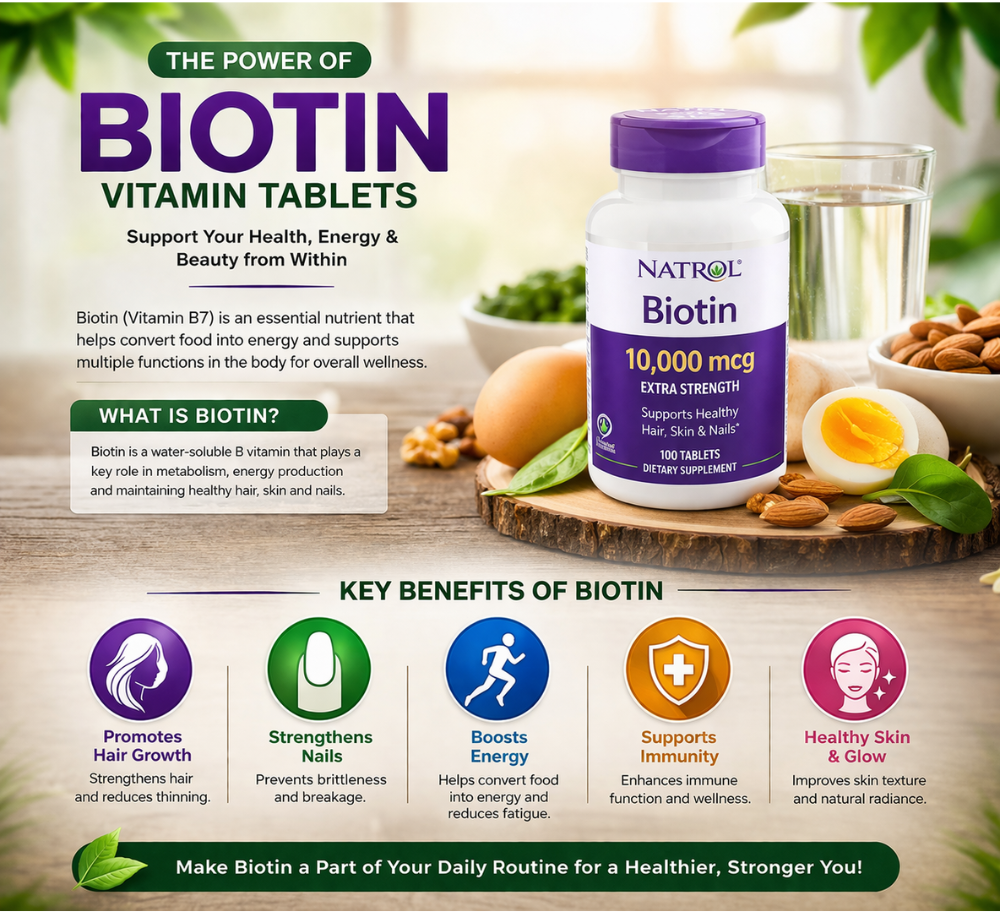
Now compare that to what is sold. Consumer biotin products commonly come in 1,000 mcg, 5,000 mcg and 10,000 mcg strengths. A 10,000 mcg tablet is more than 300 times the adequate intake. This is not because anyone established that 10,000 mcg does something 5,000 mcg does not — it is because biotin is cheap and high numbers sell.
Two things follow from that. First, since biotin is water-soluble and its target enzymes are saturable, most of a very high dose is simply excreted. Second, the higher the dose, the greater the lab interference problem below. If you and your clinician decide supplementation makes sense, there is a real argument for the lowest strength that meets the reason, not the highest number on the shelf. You can browse the vitamins and supplements and multivitamins ranges to compare strengths — a multivitamin usually contains biotin at far more modest levels than a standalone product.
The Lab-Test Problem, Explained
This is the part worth reading carefully, because it has caused real harm.
Many modern immunoassays — the automated blood tests hospitals run by the thousand — use the biotin-streptavidin binding pair to capture and detect the molecule they are measuring. It is an elegant system that relies on biotin being rare in the sample. When a patient has swallowed a high-dose supplement, their blood is flooded with free biotin, which competes with the assay's own biotin-tagged components and throws off the result.
Which Direction The Error Goes
It depends on the assay design, which is what makes it dangerous rather than merely annoying:
- Competitive assays — typically used for small molecules such as thyroid hormones, vitamin D and steroid hormones — tend to read falsely high.
- Sandwich assays — typically used for larger molecules such as TSH, troponin, parathyroid hormone and some tumour markers — tend to read falsely low.
The Two Scenarios That Matter Most
Thyroid testing. The classic pattern is a falsely low TSH combined with falsely high free T4 and free T3 — which is exactly the biochemical signature of hyperthyroidism, specifically Graves' disease. People have been worked up, and in documented cases treated, for a thyroid disorder they did not have. The reverse also occurs: a person genuinely on thyroid medication can have their dose adjusted on the basis of a distorted number.
Troponin testing. Troponin is the blood marker used in emergency departments to detect heart muscle damage. Biotin interference drives troponin results falsely low, which means a genuine heart attack can be missed. The FDA safety communication on biotin interference specifically cited a patient death linked to a falsely low troponin result. This is the reason the issue is taken seriously rather than treated as a footnote.
Other affected tests can include vitamin D, cortisol, parathyroid hormone, reproductive hormones, ferritin, and certain infectious disease and tumour marker assays. Not every laboratory platform is equally susceptible — manufacturers have been reformulating — but you have no way of knowing which platform your sample will run on.
What To Actually Do
- Tell your doctor and the phlebotomist that you take biotin, and say the dose. Supplements are routinely omitted from medication lists; this is one where it genuinely matters.
- Ask whether to pause it before a blood draw. Guidance varies, but stopping high-dose biotin for a period before testing is a common recommendation. Biotin clears reasonably quickly, though it clears more slowly if kidney function is impaired. Follow your clinician's specific instruction — do not improvise a washout.
- If a thyroid result looks surprising and does not match how you feel, mention biotin before agreeing to treatment or a dose change.
- In an emergency, say it out loud. If you are being assessed for chest pain, telling the team you take a high-dose biotin supplement is genuinely useful clinical information.
Note that biotin does not change your actual thyroid function or your actual heart. It changes the measurement. The physiology is fine; the number on the report is not.
Medication And Nutrient Interactions
- Long-term anticonvulsants. Several older anti-seizure medications are associated with reduced biotin status over time. If you take one, this is worth raising with your prescriber rather than self-managing.
- Alcohol. Chronic heavy intake impairs absorption of biotin and other B vitamins.
- Raw egg white. Avidin in uncooked egg white binds biotin in the gut and blocks absorption. Regular large quantities matter; cooking solves it entirely.
- Pantothenic acid (B5). Biotin and B5 share an intestinal transporter, so very large doses of one can compete with uptake of the other. This is a theoretical concern at ordinary doses.
- Some antibiotics. Prolonged courses may reduce gut bacterial biotin production, though the practical significance of this is uncertain.
Side Effects
Direct side effects are uncommon and mild. No toxic threshold has been established, and biotin has been used at pharmacological doses in research settings without significant toxicity.
What is occasionally reported:
- Mild digestive upset or nausea, more likely on an empty stomach
- Skin breakouts, most often described with high-dose products — the evidence here is anecdotal rather than established, though the shared transporter with B5 has been proposed as a possible reason
- Trouble sleeping, reported infrequently
The dominant risk from high-dose biotin is not toxicity. It is diagnostic error.
Special Situations
- Pregnancy and breastfeeding. Requirements shift and marginal depletion is relatively common in pregnancy, but dosing should be directed by your obstetric provider. See prenatal vitamins for the sort of product typically used, and discuss it before adding anything.
- Kidney impairment. Reduced clearance means biotin persists longer, which extends the window in which lab interference can occur.
- Anyone having blood tests soon. Elective surgery workups, fertility investigations and thyroid monitoring all rely on the assays most affected. Flag it in advance.
- Children. High-dose adult products are not appropriate; paediatric dosing should come from a clinician.
Practical Summary
- Adults need about 30 mcg a day; retail products routinely supply hundreds of times that.
- High doses are unlikely to hurt you directly, and unlikely to help unless you were short to begin with.
- The real risk is falsified blood test results — thyroid panels reading like hyperthyroidism, and troponin reading falsely low.
- Always disclose biotin use before a blood test, and ask whether to pause it.
- Take it with food if it unsettles your stomach.
For the wider context on what biotin does and does not do, see biotin's actual metabolic role and whether biotin supplements really improve hair growth.
Talk to your doctor or pharmacist before starting any supplement, particularly if you are pregnant, breastfeeding, taking prescription medication, have kidney or thyroid conditions, or have blood tests scheduled. This article is general information, not medical advice, and biotin is not a treatment for any disease.