Search for biotin online and you will find endless pages telling you it grows hair. Very few of them answer the question that actually matters first: do you have any reason to think you are short on it? Biotin deficiency is genuinely uncommon in people eating a varied diet, but it is not rare in every group. A handful of specific situations reliably lower biotin status, and the early signs are easy to mistake for something else.
This guide covers who is actually at risk, what deficiency looks like as it develops, how much biotin adults need, and which everyday foods supply it. If you are more interested in what biotin does inside a cell, see our companion piece on biotin's metabolic role beyond beauty claims.
Why Deficiency Is Uncommon In The First Place
Biotin, or vitamin B7, is a water-soluble B vitamin. Two things make outright shortfall unusual. First, the daily requirement is small — measured in micrograms, not milligrams. Second, biotin is spread across a wide range of ordinary foods rather than concentrated in one or two, so a normal mixed diet tends to supply enough without anyone thinking about it. There is also evidence that gut bacteria produce some biotin, though how much of that the body actually absorbs is not well established.
That is the general case. The exceptions are what matter.
Who Is Actually At Risk
People With Inherited Biotinidase Deficiency
Biotinidase is the enzyme that recycles biotin from used enzymes so the body can reuse it. Some people are born with a genetic defect in that enzyme and cannot recycle biotin efficiently. This is a recognised condition screened for in newborns in many places, and it is managed medically — not something to self-treat with an over-the-counter supplement.
People Taking Certain Long-Term Anticonvulsant Medications
Several older anti-seizure medications are associated with lower biotin status over long-term use, thought to be related to both absorption and faster breakdown of the vitamin. If you take medication in this class, biotin status is a reasonable thing to raise with your prescriber rather than something to guess at.
People With Chronic Heavy Alcohol Use
Alcohol interferes with the absorption of several B vitamins, biotin included, and heavy drinking usually displaces nutrient-dense food at the same time. The combination is a common route to low B-vitamin status generally.
People Who Eat Large Amounts Of Raw Egg White
This is the classic textbook cause. Raw egg white contains avidin, a protein that binds biotin tightly in the gut and prevents it being absorbed. It takes a lot of raw egg white, consumed regularly over a long period, to cause a problem — this is not a concern from an occasional raw yolk in a dressing. Cooking denatures avidin, so cooked eggs are a biotin source rather than a biotin thief.
Pregnancy And Breastfeeding
Marginal biotin depletion is relatively common in pregnancy even where diet appears adequate, likely because turnover increases. Prenatal nutrition should be managed with your obstetric provider; if you are looking at options, browse prenatal vitamins and discuss the specifics with your clinician before adding anything.
People With Significant Malabsorption
Conditions or surgeries that reduce absorptive surface in the small intestine, and long-term intravenous nutrition without added biotin, can both lower biotin status. These are clinical situations with clinical management.
What The Signs Actually Look Like
Biotin deficiency does not arrive suddenly. It develops gradually, and the sequence is fairly characteristic:
- Thinning hair that is diffuse rather than patchy, and in severe cases loss of body hair as well
- A scaly red rash, typically around the eyes, nose, mouth and other areas where skin meets mucous membrane
- Brittle nails that split or peel in layers
- Fatigue and low mood, sometimes with irritability
- Tingling or numbness in the hands and feet in more advanced cases
- Conjunctivitis and, in severe or prolonged cases, seizures
Here is the important caveat. Every one of the early signs on that list — thinning hair, brittle nails, tiredness, dry skin — has many other and far more common causes. Iron deficiency, thyroid disease, hormonal shifts, postpartum changes, illness, crash dieting and simple genetics all produce hair thinning. Assuming biotin is the culprit is the single most common mistake people make. If your hair is thinning, the useful step is a conversation with a doctor about the plausible causes, not a bottle of the highest-strength biotin you can find. Our article on whether biotin supplements really improve hair growth goes into where supplementation does and does not help.
Also worth knowing: there is no simple, widely available blood test for biotin status that is routinely used the way ferritin or B12 is. Diagnosis is usually clinical, based on risk factors and the pattern of symptoms.
How Much Biotin Adults Need
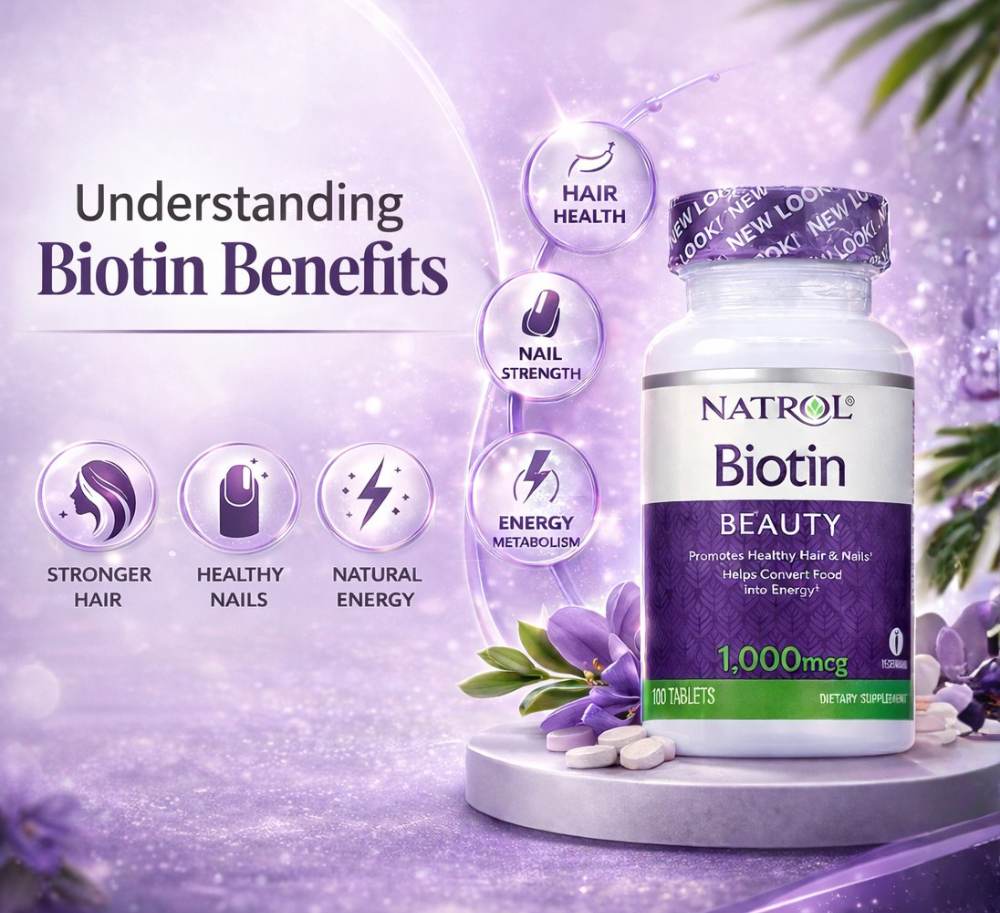
There is no full Recommended Dietary Allowance for biotin because the evidence base was not strong enough to set one. Instead, an Adequate Intake has been established, and for adults it sits at 30 micrograms per day, rising modestly during breastfeeding. That number is worth holding onto, because supplements are commonly sold at 5,000 or 10,000 micrograms — hundreds of times the adequate intake. More is not proportionally better, and very high doses carry a specific practical problem with laboratory testing that we cover in our guide to biotin dosage, safety and drug interactions.
Food Sources That Actually Supply Biotin
Ranked roughly by how much they contribute per typical serving:
- Cooked egg (whole) — one of the densest common sources; the yolk carries the biotin
- Organ meats, especially beef liver — by far the richest source by weight
- Salmon and other oily fish
- Sunflower seeds and almonds
- Sweet potato
- Pork and beef
- Legumes, particularly soybeans and peanuts
- Mushrooms, avocado, broccoli and bananas — smaller contributions, but they add up across a day
Two practical notes. Biotin is water-soluble and some is lost to cooking water, so steaming or roasting vegetables preserves more than boiling. And if you follow a plant-based diet, eggs and fish are off the table, so seeds, nuts, legumes and mushrooms need to do more of the work — along with attention to B12, which is a separate and more pressing concern. Our guide to B12 and folate for vegetarians, seniors and people on certain medications covers that ground.
When A Supplement Makes Sense
If you fall into one of the genuine risk groups above, supplementation is worth discussing — with a clinician, so the dose fits the reason. If you do not, food is very likely doing the job already, and a high-dose biotin tablet is unlikely to change anything about your hair, nails or energy. A general multivitamin or supplement that includes biotin at modest levels is a more sensible starting point than a single high-strength product, and you can browse the wider vitamins and minerals range for options.
A note before you start anything: talk to your doctor or pharmacist before beginning a new supplement, particularly if you are pregnant, breastfeeding, taking prescription medication, or have an existing health condition. This article is general information, not medical advice, and biotin is not a treatment for any disease.