Being told you need oxygen at home usually arrives with very little explanation of what happens next. Between the clinician's decision and the moment a machine is humming in your living room there is a testing process, a prescription with specific parameters, a supplier, and a stack of paperwork.
Here is what that first month actually looks like, in order.
How home oxygen is prescribed
Home oxygen is a prescription therapy. You cannot self-select it, and no retailer can determine your flow rate. The decision comes from your treating clinician, typically a pulmonologist, primary care physician, or a hospital team at discharge, and it is based on documented measurements rather than symptoms alone.
Feeling short of breath is not by itself a basis for home oxygen. Shortness of breath and low blood oxygen are related but not the same thing, and plenty of people experience one without the other. The prescription follows objective testing.
What qualifying testing looks like
Expect one or more of the following:
- Resting pulse oximetry. A clip-on sensor measures oxygen saturation while you sit quietly. Simple, quick, and usually the first test.
- Exertional (ambulatory) oximetry. Frequently a six-minute walk test with the sensor in place. Many people have acceptable saturation at rest but drop meaningfully with activity, and this test is the only way to catch that. If you have been told your resting numbers are fine but you feel terrible walking, ask specifically about exertional testing.
- Overnight oximetry. A recording device worn at home through the night. Oxygen levels can fall during sleep in ways that daytime testing completely misses.
- Arterial blood gas (ABG). A blood sample drawn from an artery, usually at the wrist. More uncomfortable than a finger sensor but the most precise measurement, and sometimes required for documentation.
Why documented values matter
Medicare and most commercial insurers require documented qualifying test values before they will cover home oxygen. The testing must generally be performed and recorded by the treating physician or a qualified provider, within a defined window before the equipment is furnished, and the results must appear in your medical record. A supplier cannot simply take your word for it, and a test you ran on a drugstore fingertip oximeter at home does not qualify.
There are also rules about the circumstances of testing. Testing is typically expected to be done while you are in a stable state on optimized treatment, not in the middle of an acute flare. Coverage may be time-limited if your qualifying values were borderline or obtained during an acute illness, with retesting required later.
The practical implication: if the paperwork is incomplete, coverage stalls. Ask your clinician's office to confirm that qualifying values and the certifying documentation have been sent to the supplier.
What a flow rate order actually specifies
An oxygen order is more detailed than a single number. It typically states:
- The flow rate in liters per minute, sometimes different for rest, activity, and sleep.
- The duration and frequency of use, such as continuous 24 hours a day, nocturnal only, or with exertion only.
- The delivery method, such as nasal cannula.
- Whether a portable system is needed and the medical reason for it.
- The diagnosis supporting the need.
Never change the flow yourself
This is the single most important rule of home oxygen. Do not turn the flow up because you feel short of breath, and do not turn it down to save electricity or make a cylinder last longer.
In some conditions, notably advanced COPD, excessive oxygen can suppress respiratory drive and cause carbon dioxide to accumulate, which is dangerous and can develop without dramatic warning signs. Turning the flow down risks the exact organ strain the therapy exists to prevent. Increased breathlessness is information to report to your clinician, not a dial to adjust. If you genuinely need a different flow, that is a prescription change.
How DME delivery and setup works
Your clinician sends the order to a durable medical equipment supplier. The supplier verifies insurance, confirms documentation, and schedules delivery, often within a few days and sometimes on the day of hospital discharge.
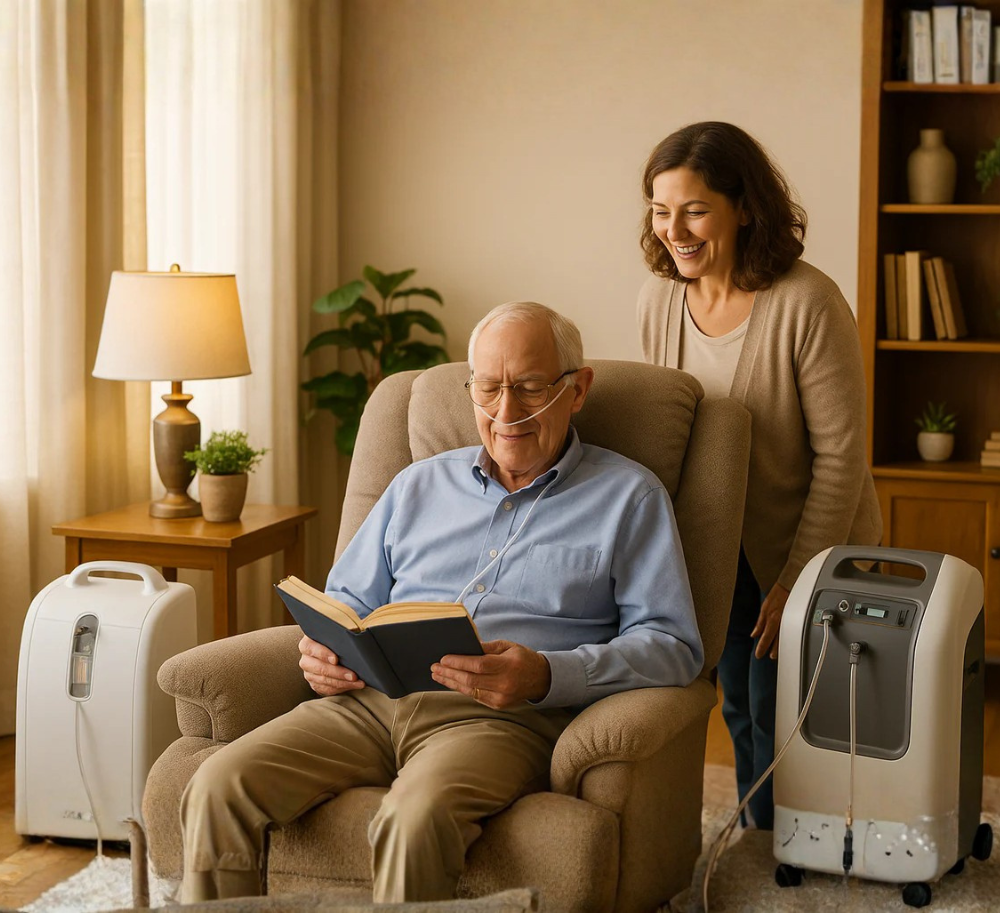
A technician brings the equipment to your home and sets it up. For a typical stationary concentrator that means choosing a location with several inches of clearance on all sides for air intake, away from heat sources, curtains, and rugs that could block vents, and on a dedicated wall outlet rather than a power strip or extension cord. They will connect the tubing, set the prescribed flow, and place required warning signage.
Most setups also include backup cylinders for power outages, a regulator, spare cannulas and tubing, and a humidifier bottle if prescribed.
The education visit: what to ask
The supplier is required to train you on the equipment. This visit tends to be shorter than you would like, so have questions ready and have a family member present.
- How do I read and confirm the flow setting, and where exactly should the float ball sit?
- What does each alarm mean, and which ones require calling you versus calling 911?
- How often do I rinse the intake filter, and how do I dry and reinstall it?
- How do I switch to a backup cylinder? Show me, then watch me do it.
- How many hours will one cylinder last at my prescribed flow?
- How do I reorder cannulas and tubing, and what is the schedule?
- What is your after-hours and emergency number, and what is a realistic response time?
- What happens during a power outage, and are you notified automatically?
- Can I get a portable unit, and what would that require?
- What are my out-of-pocket costs each month?
Write the answers down and keep them near the machine.
Insurance paperwork and the 36-month rental structure
Under Medicare Part B, home oxygen equipment is furnished as a rental rather than purchased. Medicare pays a monthly rental amount for 36 months, and you pay the applicable coinsurance after the deductible.
After the 36-month payment period, the supplier must continue to provide the equipment and required servicing for up to a total of 5 years of equipment life, provided you still have a medical need. The supplier retains ownership of the equipment throughout. Separate payments continue for oxygen contents in some circumstances, and there are provisions for maintenance and servicing visits after the rental cap.
At the end of the 5-year reasonable useful lifetime, a new equipment cycle can begin, and you may choose to stay with the same supplier or switch. Commercial insurance and Medicare Advantage plans structure this differently, so confirm your specific plan's terms.
Keep every delivery ticket, invoice, and explanation of benefits in one folder from day one.
Recertification and retesting
Home oxygen coverage is not permanent once granted. Depending on how you qualified, you may need recertification and repeat testing, particularly if your initial qualifying values were borderline or obtained during an acute illness. Your clinician's documentation must continue to support ongoing medical need.
Put reminders in your calendar. Coverage lapsing over a missed appointment is a common and entirely avoidable problem.
Your first week at home
Expect an adjustment period. Common early experiences:
- Nasal dryness, irritation, and nosebleeds. Very common. Ask about a humidifier bottle and use only water-based lubricants, never petroleum-based products, which are a fire hazard around oxygen.
- Sore spots behind the ears and on the cheeks. Foam tubing cushions solve this. Ask your supplier.
- Tubing everywhere. A 50-foot line reaches most of a house but creates a genuine trip hazard. Route it along walls, keep it out of doorways, and use clips. Falls are the leading injury in the first weeks on home oxygen.
- Machine noise and warmth. A concentrator is audible and warms the room. Many people move it to a hallway or adjacent room and run longer tubing.
- Higher electricity bills. Real and worth planning for.
- Emotional adjustment. Feeling self-conscious or discouraged is normal. Most people report meaningful improvement in energy and sleep within a few weeks.
Fire safety is not negotiable from day one. No smoking in the home by anyone, keep the unit at least 5 feet from stoves, heaters, candles, and open flame, and avoid aerosols and oil-based products near the cannula. Post the no-smoking signage your supplier provides.
Who to call for what
- Your clinician: worsening breathlessness, symptoms that oxygen is not relieving, questions about your flow rate, headaches or morning confusion, and any request to change the prescription.
- Your DME supplier: equipment alarms, malfunctions, supply reordering, cylinder deliveries, portable equipment requests, and billing questions about the equipment.
- 911: severe or sudden difficulty breathing, chest pain, blue lips or fingertips, unresponsiveness or serious confusion, or fire.
Keep all three numbers written on paper next to the machine, not only in a phone.
Cannulas, tubing, filters, and related supplies are available in respiratory care and oxygen management and oxygen concentrators and filters. Once you are settled in, our companion guide on what a concentrator costs to run covers electricity, consumables, and servicing in detail.
Related guides
- What a Home Oxygen Concentrator Really Costs to Run
- Oxygen Concentrator Buying Guide for Home Use
- Oxygen Concentrator vs Oxygen Cylinder
- Home oxygen safety and fire risk
- Traveling with oxygen
- Concentrator maintenance and care guide
This article is provided for educational purposes only and is not medical advice. Oxygen flow rates and equipment must be prescribed and set by your treating clinician; never adjust your flow rate yourself.