The purchase price of a home oxygen concentrator is the number everyone compares. It is also the number that tells you the least about what the machine will cost you. A stationary concentrator running 24 hours a day is a continuously operating appliance with an electricity bill, a consumables schedule, a service interval, and an eventual end of life.
This guide breaks down the full cost of ownership so you can plan realistically rather than being surprised twelve months in.
First decision: buy, rent, or receive equipment from a DME supplier
How you obtain the machine shapes every other cost.
- Supplied through a DME provider under insurance. For most Medicare beneficiaries, home oxygen is furnished by a durable medical equipment supplier under a rental arrangement rather than purchased. Under the Medicare oxygen benefit, the supplier is responsible for maintenance, repairs, and supplying necessary accessories during the rental period. You are responsible for coinsurance and for electricity. This is the lowest out-of-pocket path when you qualify.
- Renting privately. Sometimes used for short-term needs, travel, or when someone does not meet coverage criteria. Monthly cost is higher over time, but service is included and there is no disposal problem at the end.
- Buying outright. Cash purchase gives you ownership and no ongoing rental, but you assume everything: filters, servicing, repairs, and eventual replacement. It suits people who do not qualify for coverage, who want a second machine for a different floor of the house, or who want a backup unit.
One point worth being clear about: purchasing a concentrator does not replace the need for a prescription. Flow rate and equipment must be determined by a prescribing clinician.
Electricity: the cost nobody budgets for
This is the largest recurring expense for an owned machine, and it is easy to estimate.
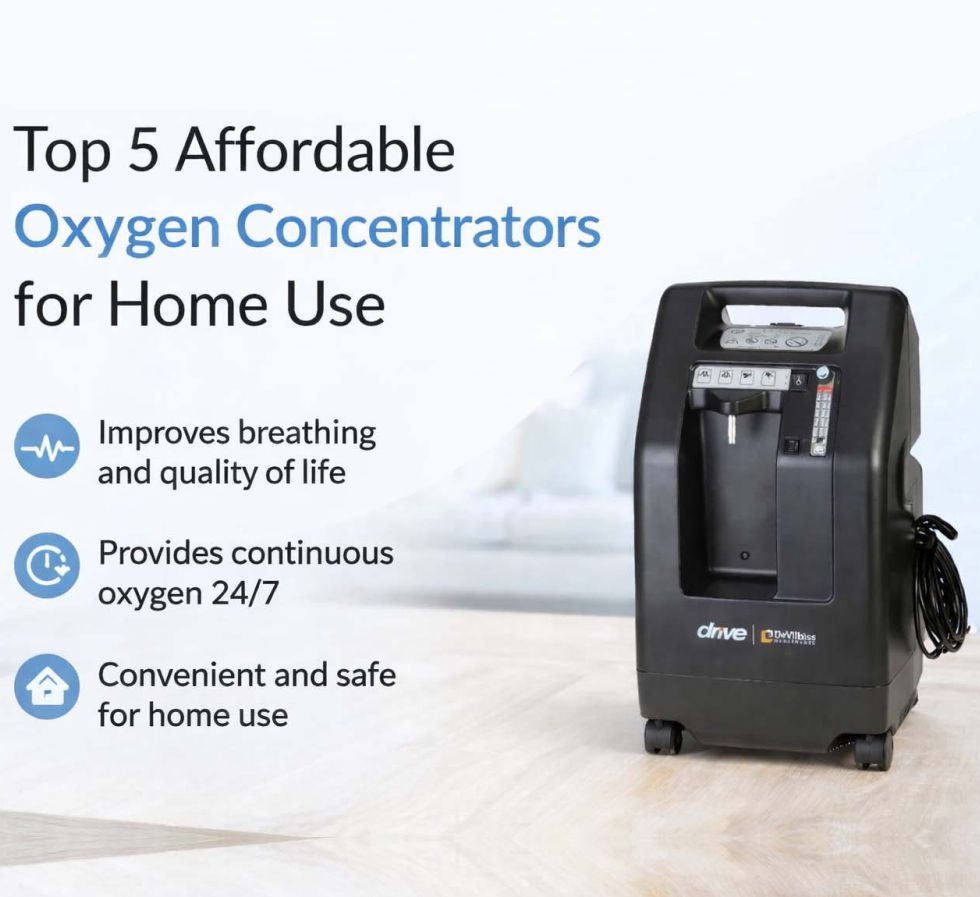
A typical 5 LPM stationary concentrator draws roughly 300 to 400 watts continuously while running. High-flow 10 LPM units draw considerably more. Portable pulse-dose units draw far less because they only deliver oxygen on inhalation.
The math: watts divided by 1,000 gives kilowatts. Multiply by hours of use to get kilowatt-hours (kWh). Multiply kWh by your electricity rate in dollars per kWh.
Worked example for a 350-watt unit running 24 hours a day:
- 0.35 kW x 24 hours = 8.4 kWh per day
- 8.4 kWh x 30 days = 252 kWh per month
- At $0.12 per kWh: about $30 per month
- At $0.18 per kWh: about $45 per month
- At $0.25 per kWh: about $63 per month
- At $0.35 per kWh: about $88 per month
Residential rates vary widely across the country, so pull the actual cents-per-kWh figure off your utility bill rather than guessing. Nighttime-only use of roughly 8 hours a day costs about a third of the numbers above.
Two practical notes. Some utilities offer medical baseline or medical equipment rate programs that provide additional electricity at a lower tier for households with prescribed medical devices; it is worth calling to ask. And in warm climates, a concentrator adds heat to the room, which can raise air conditioning costs slightly on top of the direct draw.
Consumables and replacement intervals
Individual items are inexpensive; the schedule is what adds up. Always follow the intervals in your specific device manual, since they vary by manufacturer.
- Nasal cannula: commonly replaced every 2 to 4 weeks with normal use, and immediately after any respiratory infection. This is the highest-turnover item.
- Oxygen tubing (extension tubing): typically every 1 to 3 months. Replace sooner if it kinks, discolors, stiffens, or develops a persistent odor.
- Humidifier bottle: disposable prefilled bottles are replaced as they empty. Reusable bottles should be cleaned regularly per instructions and replaced periodically. Use distilled water, never tap water, which deposits minerals.
- Gross particle filter (the foam or mesh filter at the cabinet intake): usually washable. Rinse weekly, dry completely before reinstalling, and replace when it no longer looks or feels intact. Running a unit with a clogged intake filter makes the compressor work harder, raising both power draw and wear.
- Cabinet, outlet, or bacteria filters: these are typically not user-washable and are replaced on a manufacturer schedule, often annually or at a set number of operating hours.
- Sieve beds (the zeolite molecular sieve canisters that separate oxygen from nitrogen): the major wear component. Depending on the design and operating conditions, service life is often in the range of one to three years of continuous use. Humid environments and neglected intake filters shorten it. Declining oxygen purity, purity alarms, or reduced output are the usual symptoms. On many machines this is a technician job, and on lower-cost units the replacement cost can approach the value of the machine.
Filters and replacement components for home units are grouped in oxygen concentrators and filters.
Servicing intervals
Beyond user maintenance, most stationary concentrators call for periodic professional service. Common items include an oxygen purity check with a calibrated analyzer, compressor inspection, internal filter replacement, and alarm function testing. Many manufacturers specify service at set operating-hour milestones, and your machine's hour meter is the number that matters, not the calendar.
If your equipment comes from a DME supplier under a rental arrangement, this is their responsibility and you should not be paying separately for it. If you own the machine, budget for at least an annual check, plus the possibility of a compressor or sieve bed job later in the machine's life. Compressor rebuild or replacement is generally the single largest repair a concentrator will face.
Warranty coverage and what voids it
Warranty terms differ significantly between manufacturers and often break down by component, with a longer term on the compressor or sieve beds than on the overall unit. Read the specific document that came with your machine.
Things that commonly void or limit coverage:
- Opening the cabinet or performing internal repairs yourself.
- Buying from an unauthorized reseller, or buying a unit whose warranty is not transferable to a second owner. Used-machine buyers frequently discover the warranty did not come with it.
- Using non-approved replacement parts, filters, or accessories.
- Documented failure to perform scheduled maintenance.
- Operating outside the specified environmental range, including altitude, temperature, and humidity limits.
- Physical damage, liquid ingress, or running the unit without its intake filter.
Keep receipts, register the unit with the manufacturer, and log maintenance with dates. That log is what a warranty claim will turn on.
Backup power and cylinder backup planning
A concentrator is a powered device, which means a power outage is a clinical event, not an inconvenience. Plan before you need to.
- Notify your utility. Most utilities maintain a medical baseline or priority restoration registry for customers dependent on electrically powered medical equipment. Enrollment does not guarantee faster restoration, but it puts you on the list and typically triggers advance notice of planned outages.
- Keep backup cylinders. Compressed oxygen cylinders need no power and remain the standard fallback. Work out how many hours of coverage you need at your prescribed flow, and ask your supplier for the right number of cylinders and a regulator you have been trained to use. Store cylinders upright and secured, away from heat.
- Generators and battery backup. A 300 to 400 watt continuous draw is within reach of a mid-size portable generator or a large battery power station, but check the machine's startup surge, which is higher than its running draw. Never run a fuel generator indoors or in a garage. Verify your device's tolerance for the output waveform of any inverter you plan to use.
- Have a relocation plan. Know in advance where you would go during an extended outage, and keep your supplier's after-hours number somewhere other than a phone that may run out of charge.
- Practice the switchover. Everyone in the household should know how to move to cylinder oxygen in the dark without instructions.
Related accessories and management supplies are listed under respiratory care and oxygen management.
Resale and disposal
Resale value on used concentrators is modest and drops quickly with accumulated operating hours, which any informed buyer will ask about. Non-transferable warranties reduce it further. Selling privately also carries responsibility: the buyer needs a valid prescription, and you should disclose hours, service history, and the age of the sieve beds honestly.
For disposal, do not put the unit in household trash. Options include manufacturer or supplier take-back programs, local electronics recycling, and donation to charitable medical equipment programs, several of which refurbish units for reuse domestically or abroad. If the machine still works, donation is usually the better outcome. Any attached cylinders must be returned to a gas supplier and never disposed of with general waste.
Adding it up
For an owned 5 LPM stationary unit in continuous use, plan on roughly $30 to $90 a month in electricity depending on your rate, a modest but steady spend on cannulas, tubing, and filters, an annual service check, and a significant sieve bed or compressor expense somewhere in years two through four. Compare that honestly against a supplier-provided arrangement where maintenance and accessories are included before deciding that buying is cheaper.
Related guides
- Starting Home Oxygen: Prescriptions, Qualifying Tests, DME Setup and Your First Month
- Oxygen Concentrator Buying Guide for Home Use
- Oxygen Concentrator vs Oxygen Cylinder
- Concentrator maintenance and care guide
- Home oxygen safety and fire risk
This article is provided for educational purposes only and is not medical advice. Oxygen flow rates and equipment must be prescribed and set by your treating clinician; never adjust your flow rate yourself.