Home blood pressure monitors are easy to operate. Interpreting what they display is the harder part. Most people recognise the phrase "120 over 80" without being sure what the two numbers represent, how much variation between readings is normal, or at what point a number on the screen is worth a phone call to a clinic.
This guide explains what your readings actually mean. It is general education, not a diagnosis or a treatment plan. Your own targets may be different from the standard categories below, so always confirm them with the doctor or nurse who looks after you, and follow the treatment plan you have been given.
What the two numbers mean
Blood pressure is written as one number over another and measured in millimetres of mercury, abbreviated to mmHg. A reading shown as 128/82 mmHg is read aloud as "128 over 82".
- Systolic pressure (the top, larger number) is the pressure in your arteries at the moment the heart contracts and pushes blood out.
- Diastolic pressure (the bottom, smaller number) is the pressure that remains between beats, while the heart relaxes and refills.
Both numbers matter. A raised systolic number with a normal diastolic number is common as people get older, and it is still a meaningful finding rather than something to dismiss.
The third number on the display
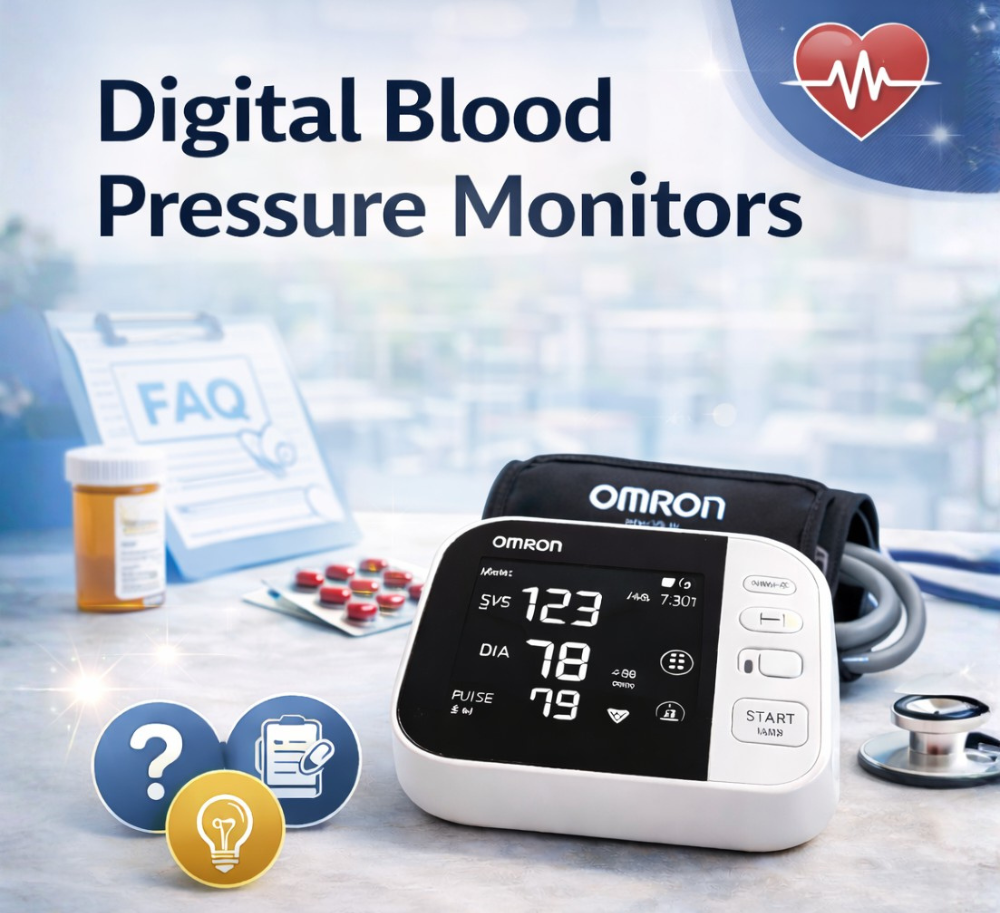
Most digital monitors also show a pulse or heart rate, in beats per minute. That is not blood pressure and should not be read as though it were. A high pulse with a normal blood pressure, or the reverse, is a different piece of information. Some monitors also show an icon when they detect an irregular heartbeat during the measurement. That symbol is a prompt to mention it to your doctor, not a diagnosis of any heart rhythm condition.
The standard blood pressure categories
Clinicians group adult readings into broad categories. These are the widely used thresholds:
- Normal: less than 120 systolic and less than 80 diastolic
- Elevated: 120 to 129 systolic and less than 80 diastolic
- Stage 1: 130 to 139 systolic, or 80 to 89 diastolic
- Stage 2: 140 or higher systolic, or 90 or higher diastolic
Two things about this table are frequently misread. First, you fall into the higher of the two categories your numbers suggest, so 135/78 sits in Stage 1 on the strength of the systolic number alone. Second, these are population categories used to guide decisions, not a personal target. Age, kidney function, diabetes, pregnancy and other conditions all change what a clinician is aiming for in an individual, and some people are given a deliberately higher target for good reasons.
Why a single reading tells you very little
Blood pressure is not a fixed property like your shoe size. It moves continuously through the day in response to posture, activity, conversation, temperature, a full bladder, caffeine, stress and sleep. A reading taken two minutes after climbing the stairs is a real measurement of a temporary state, not evidence of a condition.
This is why no responsible clinician diagnoses high blood pressure from one number. A diagnosis comes from a pattern across multiple readings taken on different days, combined with your history and examination. If you want to understand the specific things that push individual readings up and down, we cover them in detail in 10 reasons why your blood pressure fluctuates.
It also means technique matters enormously. An ill-fitting cuff, an unsupported arm or a cuff placed over a sleeve can shift a reading by a clinically meaningful amount. Our guide to getting accurate readings at home walks through the setup, and wrist versus upper-arm monitors explains the accuracy trade-off between the two cuff styles.
How to read your own numbers sensibly
- Take two or three readings a minute apart in the same sitting and use the average rather than the lowest or the most alarming one.
- Compare like with like: morning readings against morning readings, taken the same way on the same arm.
- Look at the trend over a week or more. A drift upward across many days is more informative than any single spike.
- Write the numbers down as you take them. Keeping a record is covered in our guide to logging and sharing readings with your care team.
What about readings that seem low?
A reading that is lower than usual is not automatically a problem. Many people sit comfortably below 120/80 and feel entirely well. Low blood pressure is worth raising with your doctor when it comes with symptoms such as dizziness on standing, light-headedness, blurred vision, unusual fatigue or fainting, or when it appears shortly after a change in medication.
When to contact your doctor
Arrange a routine appointment if:
- Your readings are consistently in the Stage 1 or Stage 2 range over several days.
- Your usual pattern has clearly shifted upward or downward without an obvious explanation.
- You get very different readings between your two arms.
- Your monitor repeatedly flags an irregular heartbeat.
- You have started, stopped or changed any medication, including over-the-counter remedies.
Seek urgent medical help, rather than waiting for an appointment, if a reading is very high (commonly described as 180 systolic or higher, or 120 diastolic or higher) and you repeat it after a few minutes of rest and it stays there. Seek emergency care immediately, whatever the number, if a high reading comes with chest pain, breathlessness, weakness or numbness on one side, difficulty speaking, severe headache or visual changes.
One thing to avoid entirely: never adjust, skip or double a dose of your medication because of a home reading. Bring the numbers to your prescriber and let them make that decision.
Choosing equipment you can trust
Accurate interpretation depends on accurate measurement, and that starts with a properly sized cuff and a monitor in good working order. You can browse home monitors and replacement cuffs in our blood pressure and blood pressure meters collections. If you take several daily medications alongside monitoring, our medication management range may help you keep the routine consistent.
Understanding your numbers is not about self-diagnosing. It is about arriving at your next appointment with useful information instead of a vague worry, so that you and your doctor can make decisions from the same evidence.