MEDICAL DISCLAIMER: This article is for informational and educational purposes only and does not constitute medical advice. Glucosamine and chondroitin supplements may interact with certain medications and may not be appropriate for all individuals. Always consult your physician or pharmacist before starting any new supplement, particularly if you take blood thinners, have diabetes, or have shellfish allergies. Supplements are not intended to diagnose, treat, cure, or prevent any disease.
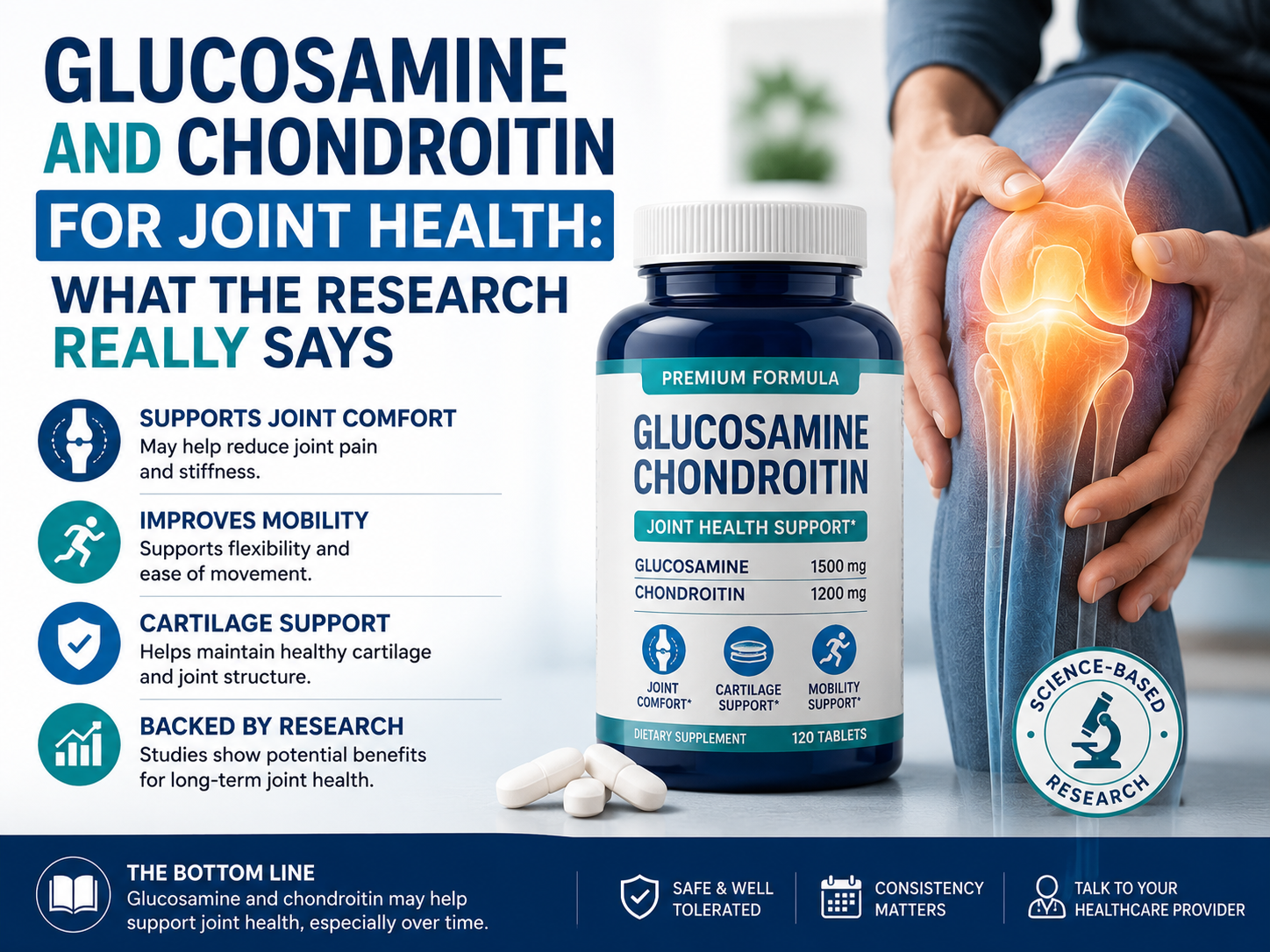
Glucosamine and Chondroitin for Joint Health: What the Research Really Says
Robert's Question: Are These Supplements Worth It?
Robert is 67 years old, and his knees have been telling him their age. His orthopedist told him he has moderate osteoarthritis — bone-on-bone in places, fraying cartilage in others — and that while surgery wasn't needed yet, he should "manage it conservatively." He's doing physical therapy, watching his weight, and using a cane on bad days. But at the pharmacy checkout, he stood for five minutes in front of the supplement aisle, staring at three different bottles of glucosamine chondroitin, wondering: do these actually work? Or is this a $40 bottle of hope?
It's a question worth taking seriously. Glucosamine and chondroitin are among the top-selling dietary supplements in the United States — and have been for decades. For a supplement category that expensive and that popular, the scientific evidence is surprisingly nuanced. Not definitively positive, not definitively negative. Complicated — like most things in medicine.
This guide gives you an honest, evidence-based picture: what glucosamine and chondroitin are, what they do in the body, what the research actually shows, who's most likely to benefit, and how to choose a quality product if you decide to try them. At AllCare Store, our goal is to help you make informed decisions — not just sell supplements.
What Are Glucosamine and Chondroitin?
Glucosamine
Glucosamine is a naturally occurring compound found in cartilage — the connective tissue that cushions joints. It's an amino sugar that plays an essential role in building and maintaining the extracellular matrix that gives cartilage its structural properties. In the body, glucosamine is produced naturally from glucose and the amino acid glutamine.
Supplemental glucosamine is most commonly derived from the shells of shellfish (shrimp, crab, lobster). It comes in several forms:
- Glucosamine sulfate — the form used in most clinical research; considered the preferred form
- Glucosamine hydrochloride (HCl) — more concentrated (more glucosamine per pill), but less studied
- N-acetyl glucosamine — a different form with different absorption characteristics
Vegetarian and vegan glucosamine products are available, typically derived from fermented corn or other plant sources — an important option for people with shellfish allergies or dietary restrictions.
Chondroitin
Chondroitin sulfate is a glycosaminoglycan — a complex sugar molecule — that's also a major component of cartilage. It helps attract and retain water in cartilage tissue (cartilage has no blood supply and depends on fluid absorption for nutrient delivery and shock absorption). Chondroitin also appears to inhibit enzymes that break down cartilage.
Supplemental chondroitin is typically derived from bovine (cow), porcine (pig), or marine cartilage sources. Because chondroitin is a large molecule, absorption from supplements has historically been questioned — though research using radiolabeled chondroitin has demonstrated meaningful absorption in humans.
What Does Osteoarthritis Actually Do to Joints?
Understanding why glucosamine and chondroitin are used requires understanding what osteoarthritis (OA) does. OA is not simply "wear and tear" — it's a complex disease involving the breakdown of cartilage, changes in the underlying bone (subchondral bone), inflammation in the joint lining, and loss of the synovial fluid that lubricates the joint.
Healthy cartilage is maintained through a dynamic balance between cartilage-building cells (chondrocytes) that produce new matrix, and degradation processes that break down old tissue. In osteoarthritis, this balance tips toward degradation: chondrocytes become less productive, inflammatory mediators accelerate breakdown, and the joint progressively loses its cushioning capacity.
The theoretical rationale for glucosamine and chondroitin supplementation is that by providing the building blocks for cartilage matrix repair, these compounds might help chondrocytes maintain or rebuild cartilage — and that the anti-degradation effects of chondroitin might slow the process. The theory is biologically plausible. The question is whether it actually works in practice.
What the Research Shows
The GAIT Trial: The Largest Study
The most significant clinical trial on glucosamine and chondroitin is the NIH-funded Glucosamine/Chondroitin Arthritis Intervention Trial (GAIT), published in the New England Journal of Medicine in 2006. This large, rigorous, double-blind, placebo-controlled trial enrolled 1,583 patients with knee osteoarthritis.
Overall findings: Neither glucosamine alone, chondroitin alone, nor their combination significantly reduced pain compared to placebo in the overall group.
The subgroup finding that changed the conversation: Among the 354 participants with moderate-to-severe knee pain at baseline, the combination of glucosamine + chondroitin reduced pain by 79% compared to placebo's 54% — a statistically significant difference. This suggests the combination may work better for people with more significant pain, rather than mild osteoarthritis.
Importantly, the commonly used comparator drug celecoxib (Celebrex) did effectively reduce pain in the overall group, showing the trial had the sensitivity to detect real effects when they existed.
European Research: More Positive Results
Several European clinical trials have produced more positive results for glucosamine sulfate specifically. A series of long-term (3-year) randomized controlled trials published in The Lancet and Arthritis & Rheumatism found that crystalline glucosamine sulfate 1,500 mg/day:
- Significantly reduced joint space narrowing (a structural measure of cartilage loss) compared to placebo over 3 years
- Reduced pain and functional limitations more than placebo
- Was associated with lower rates of total knee replacement surgery in a 5-year follow-up study
European rheumatology guidelines (EULAR and ESCEO) have given glucosamine sulfate and chondroitin sulfate stronger recommendations than US guidelines partly based on this research.
The Caveat About Supplement Quality
A significant source of inconsistency in the glucosamine/chondroitin research literature is product quality. Independent testing of commercial supplements has repeatedly found that many products contain significantly less glucosamine or chondroitin than labeled. One analysis found that some chondroitin products contained less than 10% of the labeled dose. This quality variation may partly explain why some studies show benefits while others don't — studies using pharmaceutical-grade compounds often produce better results than trials using retail supplements.
The Honest Bottom Line: Who Is Most Likely to Benefit?
Based on the totality of the evidence, here's a realistic picture:
- Most likely to benefit: People with moderate-to-severe osteoarthritis pain, particularly in the knee. The combination of glucosamine sulfate + chondroitin sulfate appears to have the most supporting evidence for this group.
- May benefit: People with mild-to-moderate knee OA, particularly with longer-term (3+ months) use. Joint structural benefits (cartilage preservation) appear to require extended use.
- Less clear benefit: Hip osteoarthritis — fewer studies, mixed results. Spine OA — limited evidence.
- Important caveat: Individual response is highly variable. Some people with OA report significant pain relief and improved function; others notice no benefit. Without a large-scale personalized trial, it's not yet possible to predict who will respond.
Glucosamine and chondroitin are not pain relievers in the way that NSAIDs are. Their effects, when they occur, are typically gradual and build over 4–8 weeks of consistent use. People who stop after 2–3 weeks without noticing a difference may not have given them enough time.
Dosage: What the Research Used
The doses used in clinical trials with positive results:
- Glucosamine sulfate: 1,500 mg per day (taken as a single dose or split into 500 mg three times daily)
- Chondroitin sulfate: 1,200 mg per day (taken as a single dose or split into 400 mg three times daily)
These are the doses found on most quality combination supplements. Higher doses have not been shown to provide additional benefit and may increase side effect risk.
Safety Profile: What to Know
Generally Well Tolerated
At recommended doses, glucosamine and chondroitin have an excellent safety profile in most people. The most common side effects are mild gastrointestinal — nausea, diarrhea, or upset stomach — which are usually reduced by taking the supplement with food.
Shellfish Allergy
Most glucosamine is derived from shellfish shells. However, shellfish allergies are typically triggered by proteins in the shellfish meat, not the shell — and processed glucosamine contains no shellfish protein. Current evidence suggests that shellfish-allergic individuals can generally tolerate shellfish-derived glucosamine safely, but this is an individual decision. People with severe shellfish allergies should consult their allergist and may prefer plant-based glucosamine products.
Blood Glucose and Diabetes
Because glucosamine is an amino sugar, there was early theoretical concern that it might affect blood sugar in people with diabetes. Clinical evidence has generally not confirmed a clinically significant effect on blood glucose at standard doses in most people — but individuals with diabetes should monitor blood glucose when starting glucosamine and discuss it with their physician or diabetes care team.
Blood Thinners (Warfarin)
Several case reports have described an interaction between glucosamine/chondroitin supplements and warfarin (Coumadin), with the supplements appearing to increase the blood-thinning effect of warfarin and raising INR values. People taking warfarin should discuss glucosamine and chondroitin use with their anticoagulation provider and monitor INR more frequently when starting or stopping these supplements.
Choosing a Quality Glucosamine Chondroitin Supplement
Given the supplement quality issues documented in research, these factors matter when selecting a product:
Look for Third-Party Certification
Independent certification from organizations like NSF International, USP (United States Pharmacopeia), or ConsumerLab verifies that the product contains what the label says in the stated amounts, without contaminants. This is particularly important for chondroitin, where quality variation is documented.
Choose Glucosamine Sulfate (Not HCl) When Possible
The majority of positive clinical research used glucosamine sulfate. Glucosamine HCl is more concentrated per pill but has a less extensive evidence base.
Check the Chondroitin Source
Bovine and marine (shark cartilage) sources are most common. Both have been used in research. Marine-derived chondroitin may be preferable for those avoiding bovine products.
Avoid Unnecessary Additives
Some combination supplements add MSM (methylsulfonylmethane), hyaluronic acid, turmeric, or other ingredients. Some of these have their own supporting evidence; others add cost without proven benefit. If you want to add additional ingredients, it's easier to evaluate each on its own merits separately.
Other Evidence-Based Approaches to Osteoarthritis Management
Glucosamine and chondroitin work best as part of a broader OA management strategy, not as standalone treatment. Evidence-based approaches include:
- Exercise and physical therapy: The most consistently evidence-supported treatment for knee OA. Low-impact aerobic exercise (walking, cycling, swimming) and targeted strengthening exercises reduce pain and improve function. Our Physical Therapy & Rehab Equipment collection includes resistance bands, exercise balls, and tools for home exercise programs.
- Weight management: Each pound of body weight puts 3–6 pounds of pressure on knee joints. Even modest weight loss (5–10%) produces meaningful pain reduction in knee OA.
- Topical NSAIDs: Diclofenac gel (Voltaren OTC) delivers anti-inflammatory medication directly to the joint with fewer systemic side effects than oral NSAIDs — an excellent option for knee OA.
- Heat and cold therapy: Heat relaxes muscles and improves circulation; cold reduces acute inflammation. Our Hot & Cold Therapy collection has options for both approaches.
- Supportive bracing: Knee braces can reduce pain and improve stability for people with knee OA, particularly those with alignment issues. See our Braces & Supports collection.
- Omega-3 fatty acids: Fish oil at therapeutic doses has anti-inflammatory effects that may benefit OA. Our guide to omega-3 fish oil covers dosing and evidence.
Frequently Asked Questions About Glucosamine and Chondroitin
How long do I need to take glucosamine chondroitin before seeing results?
Unlike pain relievers that work within hours, glucosamine and chondroitin typically require consistent use for 4–8 weeks before meaningful effects become apparent. Some people notice improvement in 4 weeks; others don't see changes until 8–12 weeks. Structural benefits (cartilage preservation and joint space maintenance) have been demonstrated in trials lasting 3 years — these are long-term benefits, not short-term pain relief. Most healthcare providers recommend trying them for at least 2–3 months before evaluating whether they're helping, and discontinuing if no benefit is apparent after that period.
Can I take glucosamine and chondroitin with other arthritis medications?
For most people, glucosamine and chondroitin can be taken alongside common OA medications like acetaminophen (Tylenol) or oral NSAIDs (ibuprofen, naproxen) without interaction. The most significant documented interaction is with warfarin (Coumadin), where glucosamine/chondroitin may enhance the anticoagulant effect and require dose adjustment. Always tell your doctor and pharmacist about all supplements you take — not just prescription medications. People taking prescription medications for any condition should review potential interactions before starting any new supplement.
Is glucosamine chondroitin safe for long-term use?
Long-term clinical trials (up to 3 years) have generally shown glucosamine and chondroitin to be well tolerated with a favorable safety profile. There is no evidence of significant cumulative toxicity or organ damage with extended use at recommended doses. The GAIT trial and European long-term studies found adverse event rates similar to placebo. That said, long-term supplement use should be periodically reviewed with your healthcare provider, particularly if you have other health conditions or start any new medications.
Does glucosamine chondroitin work for hip arthritis?
Most of the clinical research on glucosamine and chondroitin has focused on knee osteoarthritis. The evidence for hip OA is more limited and less consistent. Some studies and clinical guidelines suggest that the same mechanisms that apply to knee cartilage should theoretically apply to the hip, and some rheumatologists recommend trying these supplements for hip OA — particularly for patients who prefer to avoid or delay surgery. The honest answer is that the evidence is much stronger for knee OA than hip OA, and individual results vary. Discuss with your orthopedist or rheumatologist whether a trial makes sense for your specific situation.
Is MSM better than glucosamine chondroitin?
MSM (methylsulfonylmethane) is a sulfur-containing compound with its own limited but emerging evidence for joint pain and inflammation. It's a different supplement from glucosamine and chondroitin — not a replacement. Some clinical trials have found MSM reduces OA pain and inflammation markers modestly. The evidence base is much smaller than for glucosamine/chondroitin. Some combination products include all three. Whether adding MSM provides meaningful additional benefit beyond glucosamine and chondroitin isn't definitively established, but the safety profile of MSM is similar — generally well tolerated at typical doses (1,500–3,000 mg/day). Consider discussing with your healthcare provider which approach makes most sense for your situation.
Supporting Joint Health at AllCare Store
Managing osteoarthritis is a whole-person effort, and AllCare Store is here to support every part of it. From supplements to mobility aids to pain relief products, we carry the tools that help people with arthritis live more comfortably and actively.
Explore our Vitamins & Supplements collection for quality joint health supplements. Browse our Pain Relief collection for topical creams, heat therapy, TENS units, and other tools for managing arthritis pain. And check out our Braces & Supports collection for knee and joint support options.
If you're uncertain which products fit your needs, call our care team at 1-888-889-6260. We're happy to help you think through the options.
And for Robert, standing in the supplement aisle with his $40 question: the honest answer is that glucosamine chondroitin might meaningfully help — particularly if his pain is moderate to severe, he uses a quality product at the right dose, and gives it at least 8 weeks. It's not a guarantee, and it's not a substitute for the physical therapy and lifestyle work he's doing. But it's a reasonable, safe thing to try — and for many people, it makes a real difference.
Medical Disclaimer: This article is for informational purposes only and does not constitute medical advice. Individuals at high risk for pressure injuries should consult a physician, occupational therapist, or certified rehabilitation engineer before selecting a wheelchair cushion.