
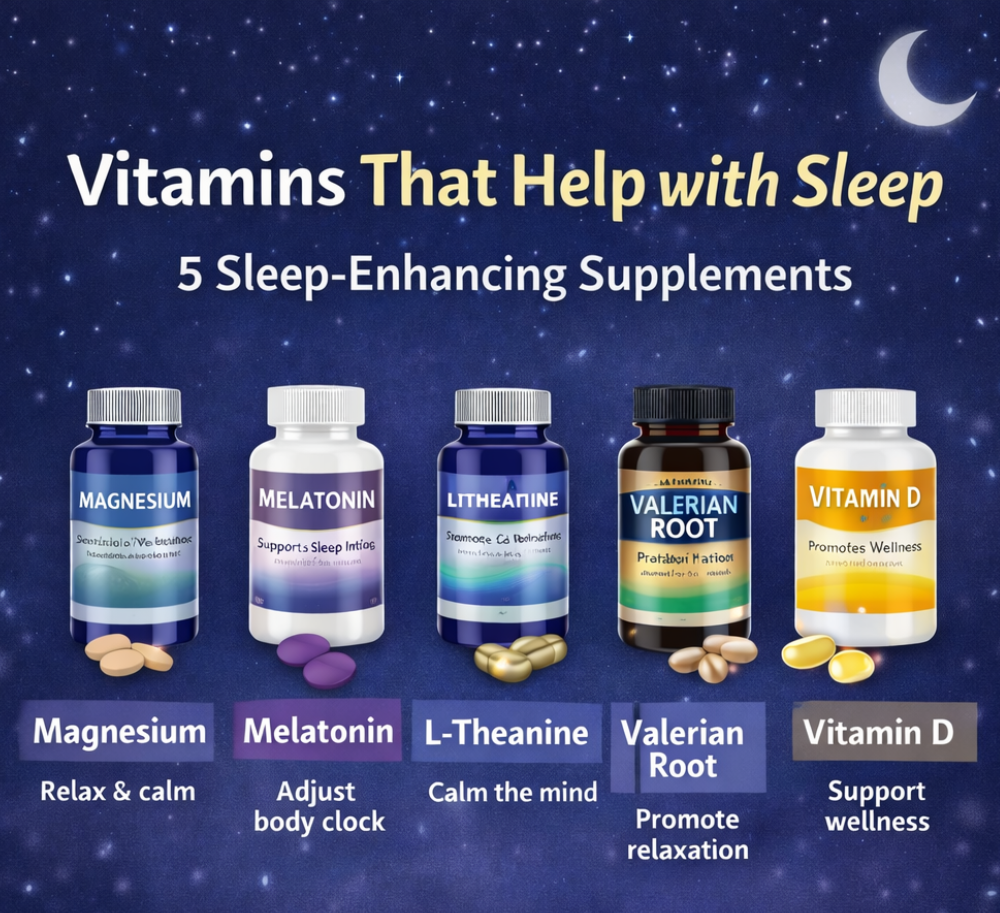
The sleep supplement aisle is large, confident, and mostly ahead of the evidence. Some of what is sold has a reasonable basis for specific situations. Some has thin support. And a fair amount of it is sold to people whose sleep problem would respond better to something that costs nothing.
Here is an honest walk through the common options: what each one is, where it has a defensible use, and where the claims outrun what is actually known. First, a distinction that clears up most of the confusion.
Melatonin is not a sleeping pill, and none of these are vitamins
Two things get muddled constantly.
Melatonin is a hormone your body produces in response to darkness. It is a timing signal — it tells your body clock that night has arrived. It is not a sedative. Taking it does not knock you out the way a sleeping tablet does, and people who expect sedation usually conclude it "did nothing".
Second, most products marketed as "sleep vitamins" contain no vitamins at all. Magnesium is a mineral, melatonin is a hormone, and valerian and L-theanine are plant-derived compounds. The word "vitamin" in this context is marketing shorthand, and it matters because it implies you are correcting a deficiency when usually you are not.
Melatonin: genuinely useful for timing problems
The clearest use for melatonin is circadian — problems with when you sleep rather than whether you can. Jet lag and shift work are the standard examples, along with delayed sleep phase, where you naturally fall asleep and wake very late.
Some practical points that matter more than brand:
- Timing is the active ingredient. Taken at the wrong time it can shift your clock in the wrong direction and make things worse.
- More is not better. Higher doses do not reliably work better than lower ones for circadian purposes, and are more likely to leave next-day grogginess.
- It is regulated differently in different countries — available over the counter in some, prescription-only in others.
- It is not well suited to long-term general insomnia, which is a different problem with a different answer.
Melatonin can interact with several medicines, including anticoagulants, anticonvulsants, diabetes medication and immunosuppressants, and it is not generally recommended in pregnancy or for children without medical advice. Ask a pharmacist before starting it.
Magnesium: worth it if you are short of it
Magnesium is genuinely essential, involved in a very large number of processes including nerve and muscle function. Intakes below recommended levels are reasonably common.
The honest position on sleep specifically: research exists, some of it is encouraging, and much of it involves small studies, older adults, or people with low magnesium to begin with. It is not strong enough to support "magnesium fixes insomnia". It is reasonable to say that if your intake is low, correcting that is worthwhile for many reasons, and better sleep may be among them.
Where it is more defensible is night-time leg cramps and muscle tension that disrupt sleep, and general dietary shortfall. Food sources — nuts, seeds, legumes, wholegrains, leafy greens — are the sensible first stop.
On forms: different magnesium salts differ in absorption and in how well they are tolerated. Magnesium oxide is poorly absorbed and more likely to cause loose stools; citrate and glycinate are generally better tolerated. That is a real difference, unlike most format claims. Magnesium can interfere with the absorption of some antibiotics and other medicines, so spacing matters — a pharmacist can advise.
L-theanine and valerian: modest evidence, low risk
L-theanine is an amino acid found in tea. It is often reported as calming without sedation. The research base is small and mixed, and the honest summary is that it may help some people feel less wound up at bedtime, with limited evidence for changing sleep itself.
Valerian has a long history of traditional use for sleep. Trials have produced inconsistent results, partly because preparations vary enormously in what they actually contain. Some people find it helpful; the evidence does not support confident claims. Valerian may add to the effect of alcohol and sedating medicines, and is not recommended in pregnancy.
Both are generally low-risk for healthy adults, which is a fair reason to try one — provided expectations are calibrated and you are not taking them instead of addressing something more significant. If you want to explore this category, All Care Store's herbal supplements range covers it.
Vitamin D and the B vitamins: correct a deficiency, do not treat insomnia
Low vitamin D has been observed alongside poor sleep in population studies, but that kind of association does not establish that one causes the other, and people with low vitamin D often differ in other relevant ways — less time outdoors, less activity, more ill health. Vitamin D deficiency is worth correcting on its own merits; presenting it as a sleep treatment goes beyond what is known.
Similarly, B6 is involved in pathways that produce serotonin and melatonin, which is where the "B6 for sleep" claim originates. Being involved in a pathway is not the same as supplementing it improving sleep in people who are not deficient. Worth noting too that very high-dose B6 taken over long periods is associated with nerve damage — this is one where more is genuinely not better. What each B vitamin actually does covers this properly.
The unglamorous things that outperform all of the above
For persistent difficulty falling or staying asleep, the best-supported treatment is not a supplement. Cognitive behavioural therapy for insomnia is the recommended first-line treatment for chronic insomnia in major clinical guidelines, and it has better long-term outcomes than sleeping medication. It is available through some health services and through structured self-help programmes.
Alongside that, the basics genuinely do more than most bottles:
- A consistent wake time, including at weekends. This anchors your body clock more effectively than a consistent bedtime.
- Morning daylight. Light exposure early in the day is the strongest signal your circadian system receives.
- Caffeine timing. Caffeine has a long half-life and an afternoon coffee is still active at bedtime for many people.
- Alcohol. It helps you fall asleep and reliably degrades the second half of the night.
- Not lying awake in bed. If you have been awake a while, get up, do something quiet in dim light, and go back when sleepy.
- A cool, dark, quiet room. Dull, and it works.
When it is not a sleep problem
Some causes of poor sleep will not respond to any supplement and need to be identified.
- Sleep apnoea — snoring, witnessed pauses in breathing, waking unrefreshed, daytime sleepiness. Common, underdiagnosed, and treatable.
- Restless legs syndrome — an urge to move the legs at rest, relieved by movement. Often linked to low iron stores, which is testable.
- Chronic pain, reflux, frequent night-time urination, anxiety and depression — each disrupts sleep and each has its own treatment.
- Medication side effects — worth reviewing with a pharmacist.
If you are sleepy enough during the day that driving feels risky, if someone has seen you stop breathing in your sleep, or if poor sleep has persisted for months, that warrants a doctor rather than a supplement.
Before you start anything
Supplements can interact with prescription medicines. If you take regular medication, are pregnant or breastfeeding, or have an ongoing health condition, check with your doctor or pharmacist first. Start one thing at a time so you can tell what is doing what, and give it a couple of weeks before judging.
Related reading
- Who actually needs a multivitamin — and who is spending money for nothing.
- B12 and folate — what seniors, vegetarians and people on metformin or acid reducers need to know.
- Liquid vs tablet supplements — what "better absorption" claims actually mean.



