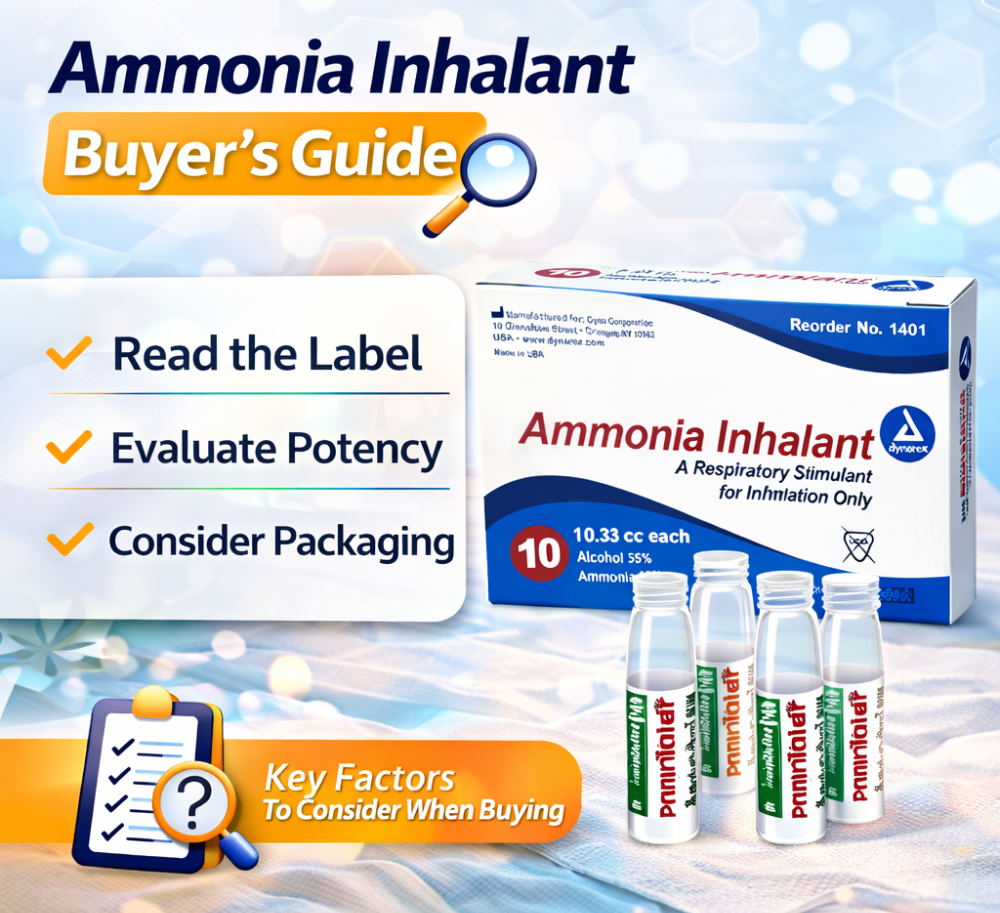
Buying ammonia inhalants is not really a question of which brand is best. It is a question of which format survives the way you actually store it, how many you need for the setting, and whether the stock will still work in eighteen months when someone finally reaches for it.
This guide is written for the person doing the buying — whether that is one box for a household cupboard or a standing order for a facility. If you need the background on the product itself first, see what ammonia inhalants are and how they work.
Match the Format to the Setting
Crushable single-use ampoules
Small glass or foil-wrapped vials, activated by crushing between the fingers. They are sealed until the moment of use, which makes them the most reliable option for a kit that sits untouched for long periods.
- Best for: first aid kits, response bags, vehicle kits, anywhere with infrequent use
- Strengths: no contamination between users, consistent dose, long shelf stability while sealed
- Trade-offs: single use, and a crushed one must be disposed of straight away
Reusable capped bottles or jars
A sealed container that is opened, used, and re-capped. Cost per use is far lower, but each opening lets vapour escape, so potency drops over time and the product needs a disciplined re-cap habit.
- Best for: a single regular user, or a training environment where one person controls the product
- Strengths: economical, no waste, controlled exposure
- Trade-offs: shared use raises hygiene questions, and potency depends on how carefully it is closed
Towelettes and pads
Individually foil-wrapped, disposable, and generally milder than an ampoule. Easy to carry flat and simple to hand to someone.
- Best for: pockets, purses, low-intensity settings
- Trade-offs: less potent, and the foil can be fiddly with cold or gloved hands
Reading the Label
Two things on the packaging are worth more than any marketing copy on the front.
- The ingredient list. A straightforward product is ammonia or ammonium carbonate with water and sometimes alcohol. Added fragrances and essential oils give you a second irritant for no benefit — there is a good case for choosing the plainest formulation available.
- The stated strength or grade. Higher concentration is not a feature. It is a harsher exposure. Unless a clinician has told you otherwise, a standard-strength product is the right default for both home and workplace kits.
Be sceptical of “extra strength” and novelty packaging aimed at the gym market. It is the same chemistry with a bigger label.
How Much To Stock, and Where
Household kit
A small box of sealed ampoules is enough for most homes. Store it with the rest of the first aid supplies rather than in a bathroom, where humidity shortens shelf life. If a member of the household faints regularly, that is a conversation for their doctor before it is a stocking decision.
Workplace and facility kits
Stock per kit rather than per site — the vial in the office on the third floor is no use to someone on the loading dock. Practical approach:
- A few sealed ampoules in each first aid station, not a single large supply centrally
- Sealed single-use format only, so anything opened is visibly spent
- Include them on the same inspection schedule as the rest of the kit
- Check any workplace or regulatory guidance that applies to your first aid provision before adding items
Gyms and athletic training rooms
Usage here is far higher and far more casual, which argues for a controlled supply held by staff rather than an open box on a counter. It also argues for a written rule about head injuries — covered in our article on use in and beyond the sports arena.
Response and event bags
Weight and reliability decide it: sealed ampoules, stored where they will not be crushed by heavier equipment, in a rigid pocket or small hard case. Duplicate a small quantity rather than carrying one large container.
Expiry, Rotation, and Storage
This is where most stock fails. Ammonia is volatile; the product degrades whether or not you use it.
- Record the earliest expiry date on the outside of each kit, not just on the box inside
- Set a recurring review — twice a year is a reasonable rhythm for a workplace, annually for a home kit
- Store cool and dry; avoid vehicles that bake in summer or freeze in winter, and avoid bathroom cabinets
- Keep everything sealed in its original wrapping until use, so loose vials do not crush in transit
- Replace expired stock rather than keeping it as a backup — an inhalant that has lost its potency is not a fallback, it is a delay
Small Details That Matter in a Real Situation
- Can it be activated one-handed? Your other hand may be supporting someone.
- Can it be opened with gloves on, or with cold hands?
- Is the packaging legible in poor light?
- Is disposal obvious? A used ampoule should be immediately identifiable as spent.
Before You Buy
Two questions worth answering honestly. First: is the problem you are solving actually an ammonia inhalant problem? Recurrent fainting, dizziness on standing, or lightheadedness during exercise are worth raising with a doctor rather than managing with a vial. Second: does anyone in the household or team have asthma, COPD, or another respiratory condition? If so, an inhalant is not appropriate for them and the kit should reflect that. Our safety and technique guide covers contraindications in more detail.
Related Reading and Categories
- Ammonia inhalants: what they are and how they work
- Safety, correct technique, and contraindications
- Beyond the sports arena: sideline and everyday use
Browse Respiratory Care & Oxygen Management and First Aid for related supplies.
This article is general purchasing and safety information, not medical advice. Talk to your doctor before using ammonia inhalants if you have a respiratory or cardiac condition, are pregnant, or experience fainting more than occasionally.