The Sound That Let Susan Sleep Again
Susan's mother, Dorothy, is 84 and has moderate dementia. For most of a year, Dorothy had been getting up in the night — to use the bathroom, to look for a husband who died in 2019, sometimes for reasons no one could reconstruct in the morning. Twice she made it. The third time, Susan found her on the bathroom floor at 4 a.m. with a fractured wrist and a bruise blooming across one hip.
After that, Susan stopped sleeping. Not metaphorically — she lay awake listening, straining to hear the creak of the bed frame across the hall, jolting upright at every settling sound the old house made. Within three weeks she was exhausted, short-tempered, and quietly terrified of the next fall. She loved her mother and was slowly coming apart.
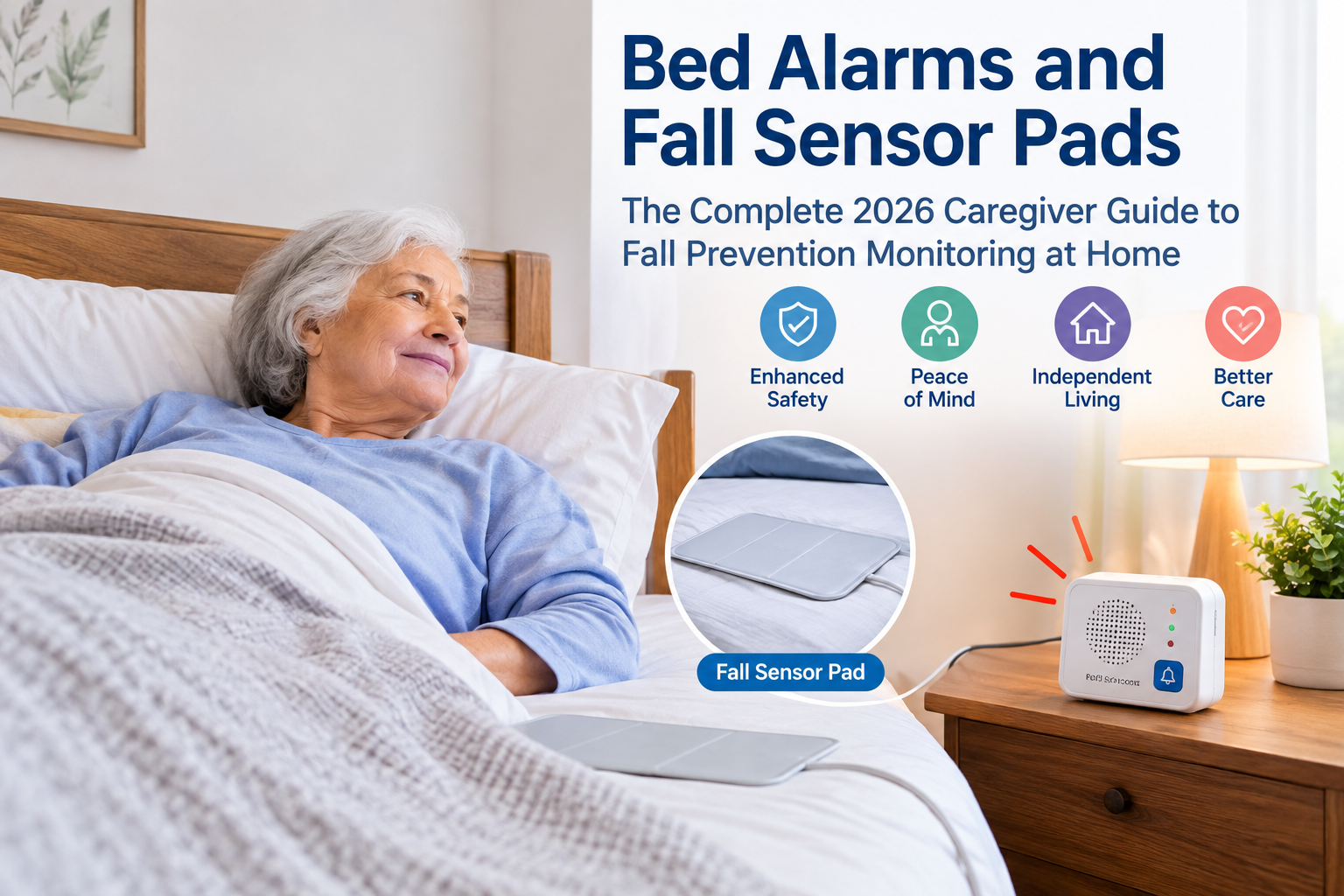
What changed everything was a strip of vinyl about the size of a placemat, laid under the sheet where Dorothy's hips rested, wired to a small monitor. When Dorothy shifted her weight to sit up and swing her legs out of bed, the pad lost pressure and the monitor sounded — and a second chime went off on a little pager on Susan's nightstand. Susan could reach her mother before Dorothy's feet ever touched the floor.
The wrist healed. There was no fourth fall. And for the first time in a month, Susan slept, because she no longer had to be the alarm. "I didn't realize how much of my job had become just listening," she said. "The pad does the listening now. I just have to answer."
That is exactly what a bed or chair alarm does. It doesn't stop a fall by force — it buys the seconds a caregiver needs to intervene, and it hands back the ability to rest. This guide covers how these devices work, the different types, how to choose one, how to set it up so it actually helps, and the honest limits and ethical questions that come with monitoring a person you love.
What a Bed or Chair Alarm Actually Is
A fall-prevention alarm is a simple idea executed a few different ways. At its core is a sensor that detects when a person begins to leave a bed or chair, connected to something that alerts a caregiver. Most home systems use a pressure-sensitive pad: the person's weight holds the pad's circuit in one state, and when that weight lifts, the circuit changes and triggers an alarm.
The two building blocks are almost always:
- A sensor — a thin pad placed under the person (in bed or on a chair seat), a floor mat they step on, or a clip/tab attached to their clothing.
- A monitor or alert — a small box that sounds an audible alarm, and increasingly a wireless transmitter that also pings a caregiver's pager or phone in another room.
The distinction that matters most for families: an at-the-bedside alarm sounds right where the person is, which can startle or even distress someone with dementia, while a wireless, caregiver-paged system keeps the loud alert in the caregiver's room and only a soft (or no) sound near the patient. More on that choice below, because it changes the whole experience.
The Types of Fall-Prevention Alarms
There is no single "best" alarm — the right one depends on where the person spends time and what they can do. Here is the full landscape.
| Type | How It Works | Best For |
|---|---|---|
| Bed sensor pad | A pad under the sheet senses when the person lifts off to sit up or exit. | Nighttime wandering and unsafe bed exits. |
| Chair sensor pad | A seat pad detects when weight lifts from a chair or wheelchair. | People who try to stand unassisted from a recliner or wheelchair. |
| Floor mat alarm | A mat beside the bed triggers when stepped on. | Confirming the person is actually up and moving; no pad under the body. |
| Clip / tab (pull-cord) alarm | A magnet clips to clothing; standing pulls the pin and sounds the alarm. | Immediate alert the moment someone rises; very early warning. |
| Seatbelt / self-release belt alarm | A wheelchair belt sounds when unbuckled or when the user leans to exit. | Wheelchair users who attempt unsafe transfers. |
| Wireless caregiver pager | Any sensor above transmits to a remote pager/receiver in another room. | Caregivers who sleep elsewhere or don't want a loud alarm near the patient. |
| Motion / beam sensor | An infrared beam or motion sensor alerts when the person crosses it. | Contact-free monitoring for people who dislike pads. |
Many families end up combining two — for example a bed pad at night and a chair pad for the daytime recliner, both feeding one wireless pager.
Who Benefits From a Fall Alarm
Alarms are for people at meaningful fall risk who attempt to move without help they still need. That includes:
- Dementia and confusion — the classic case, where someone forgets they can't walk safely or gets up with no memory of why. Pair monitoring with the broader strategies in our dementia care essentials guide and, for wandering outside the home, GPS trackers for seniors with dementia.
- Post-surgery and post-stroke recovery — when strength and balance haven't caught up to the person's own sense of independence.
- History of falls — a prior fall is the single strongest predictor of the next one.
- Weakness, dizziness, or medication effects — including sedatives and blood pressure drugs that cause lightheadedness on standing.
- Impulsivity or poor safety awareness — people who won't wait for or call for help.
Who an alarm is not right for: a fully alert, capable person who simply wants privacy (that's surveillance, not safety), and a person who is completely immobile and cannot get up at all (there is nothing to alarm). For someone who can call for help reliably, a medical alert system may serve better.
How to Choose the Right Alarm
Corded vs. Wireless
Corded systems connect the pad directly to a monitor at the bedside with a cable. They're inexpensive and reliable, but the alarm sounds right next to the person, and the cord is one more thing near the floor. Wireless systems send the signal to a remote pager, so the caregiver is alerted without a loud noise startling the patient. For dementia care especially, wireless-to-a-pager is usually the kinder, more effective choice.
Alarm-at-Bedside vs. Caregiver Pager
A blaring alarm inches from a confused, half-asleep person can frighten them, worsen agitation, and — cruelly — sometimes cause the very startled movement that leads to a fall. If the person has dementia, prioritize a system where the loud alert reaches you, not them.
Sensor Placement Sensitivity and Delay
Pads under the body give the earliest warning (they trigger as the person shifts to rise); floor mats confirm the person is already up. Clip alarms are the earliest of all. Choose based on how many seconds of lead time the person's mobility requires — someone very unsteady needs the earliest possible warning.
Volume, Tone, and Reset
Look for adjustable volume, a tone you'll actually wake to, a low-battery indicator, and a simple reset. Nurse-call compatibility matters in some settings. And check the pad's rated lifespan — sensor pads wear out and should be replaced on schedule.
Pad Size and Type
Bed pads are typically around 10 x 30 inches, positioned under the hips/lower back. Chair pads are smaller (roughly 10 x 15 or 13 x 13 inches) for the seat. Larger bed pads tolerate more movement without false alarms; make sure the pad matches the monitor it's designed for.
Fall-Prevention Alarms at AllCare Store
AllCare Store carries bed and chair sensor pads, alarm monitors, and wheelchair fall-monitoring belts. A few representative options from the beds and accessories collection:
| Product | What It's For | Approx. Price |
|---|---|---|
| Drive Bed Sensor Pad Alarm System (11 x 30 in.) | Nighttime bed-exit monitoring with audible alarm. | ~$76 |
| McKesson Bed Sensor Pad (10 x 30 in.) | Replacement/standalone bed pad for movement monitoring. | ~$50 |
| Posey Chair Sensor Pad (13 x 13 in.) | Detects unsafe standing from a chair or wheelchair. | ~$41 |
| Chair Sensor Pad (for Alarm 13606) | Replacement seat pad for an existing alarm unit. | ~$41 |
| Dynarex Fall Monitoring Seatbelts | Wheelchair belt with an audible alarm on exit attempts. | ~$35 |
Prices shown are typical 2026 figures current at the time of writing and may change. Browse the full beds and accessories collection for current models, monitors, and wireless pager options.
Setting Up an Alarm So It Actually Helps
- Place the bed pad under the hips and lower back, beneath the sheet, where the person's weight rests when lying down — not under the legs or head. Test it by lying on it and then lifting off.
- Position a chair pad at the back of the seat, where the person's weight sits, and secure it so it can't slide forward.
- Set a volume you will wake to, and if using a wireless pager, test the range through your actual walls before relying on it overnight.
- Keep the monitor and cords off the floor path. An alarm that prevents one fall shouldn't create a trip hazard for another. Route cords along the bed frame.
- Have the environment ready for a fast, safe response: a clear path, a nightlight, a low or adjustable bed, and, where appropriate, bed assist handles so the person has something safe to hold if they do get up.
- Test the whole system daily and replace pads and batteries on schedule. An alarm you assume is working, but isn't, is worse than none.
The False-Alarm and Alarm-Fatigue Problem
The biggest reason alarms fail in the home isn't the technology — it's alarm fatigue. If the pad chirps every time the person rolls over, caregivers start tuning it out, and eventually the one alarm that matters goes unanswered. Reduce false alarms by choosing an adequately sized pad, placing it correctly, using a short exit delay if the monitor offers one, and matching the sensor type to the behavior you're actually trying to catch. If an alarm is going off constantly, that is information: the setup needs adjusting, or the person's needs have changed and it's time to reassess the whole plan.
The Dignity Question: Alarms Are Not Restraints
This deserves honesty. A monitoring alarm can feel, to the person, like being watched or controlled — and for someone with intact awareness, that matters. A few principles keep monitoring on the right side of the line:
- An alarm is a monitor, not a restraint. It should never be used to keep someone from moving, only to alert you so you can help them move safely. Physical restraints carry their own serious risks and are a separate, clinician-guided decision.
- Involve the person when you can. Explain that the goal is to help, not to confine, and honor their preferences where their safety allows.
- Reassess regularly. Needs change. An alarm appropriate during post-surgical recovery may not be needed months later.
- Pair it with real support, not as a substitute for care. The alarm buys time; a good response, a reachable call for help, and a safe environment are what actually prevent injury.
Alarms Are One Layer — Build the Whole Plan
A fall alarm works best as part of a layered fall-prevention strategy, not on its own:
- The environment: clear walkways, good lighting and nightlights, non-slip flooring, and no loose rugs or cords.
- The bathroom, where a large share of home falls happen — see our guides to installing grab bars and bathroom safety.
- The bed and chair: the right height and stability, with bed assist handles and supportive seating.
- The body: strength and balance work with a therapist, a medication review for dizziness, and vision and footwear checks.
- The safety net: a way to summon help, whether a caregiver pager or a medical alert system for a person who lives alone.
Why Shop Fall-Prevention Equipment at AllCare Store
AllCare Store carries bed and chair sensor pads, alarm monitors, wireless caregiver pagers, wheelchair fall-monitoring belts, bed assist handles, hospital beds, grab bars, and the broader range of home safety equipment that a complete fall-prevention plan needs. Everything ships free within the U.S. in discreet packaging, with 30-day returns.
Choosing a monitoring setup is one of those decisions where a phone call beats a search bar — the right system depends on where the person spends time, whether they have dementia, how much warning they need, and where the caregiver sleeps. Our team helps families work through exactly this every day.
Start with the beds and accessories collection and the mobility products collection.
Frequently Asked Questions
How does a bed alarm work?
Most home bed alarms use a pressure-sensitive pad placed under the sheet beneath the person's hips. The person's weight holds the pad's circuit in one state; when they shift their weight to sit up or exit, the pressure changes and the monitor sounds an alarm, alerting a caregiver so they can help before a fall.
Are bed alarms considered restraints?
No. A bed or chair alarm is a monitoring device that alerts a caregiver — it does not physically hold the person in place. Physical restraints are a separate, higher-risk intervention that requires clinical guidance. Alarms should only be used to prompt safe assistance, never to discourage movement.
What's the difference between a corded and a wireless bed alarm?
A corded alarm connects the pad to a monitor at the bedside, so the alarm sounds right next to the person. A wireless system transmits to a remote pager, letting the loud alert reach the caregiver in another room without startling the patient. Wireless-to-a-pager is usually the better choice for dementia care.
Will the alarm scare a person with dementia?
A loud alarm inches from a confused person can frighten and agitate them, and occasionally cause the startled movement that leads to a fall. That's exactly why a wireless system that alerts the caregiver — not the patient — is preferred for people with dementia.
Where do I place the bed sensor pad?
Under the sheet, beneath the hips and lower back where the person's weight rests when lying down — not under the legs or head. Test it by lying on it and lifting off to confirm it triggers as the person begins to rise.
How do I stop false alarms?
Use an adequately sized pad, place it correctly, choose a monitor with a short exit delay if available, and match the sensor type to the behavior you're catching. Frequent false alarms cause "alarm fatigue," where caregivers stop responding — so if it's triggering constantly, adjust the setup or reassess the plan.
How long do sensor pads last?
Pressure sensor pads wear out with use and have a rated lifespan printed by the manufacturer, often measured in months. Replace them on schedule and test the system daily — an alarm you assume works but doesn't is worse than no alarm at all.
Do I need a bed alarm or a medical alert system?
A bed alarm suits someone who gets up without help they still need and can't reliably call for assistance — common in dementia. A medical alert system suits an alert person who can press a button to summon help. Many households use both, for different situations.
Can I use one alarm for both a bed and a chair?
Yes, with the right setup. Many monitors accept both a bed pad and a chair pad, and a single wireless pager can receive from multiple sensors. Match each pad to the monitor it's designed for.
Does Medicare cover bed alarms?
Coverage for fall-monitoring alarms is limited and varies; they are often an out-of-pocket purchase. They are typically inexpensive relative to the cost of a fall. Check current details with your plan, and keep any physician documentation if your situation may qualify.
Will an alarm prevent all falls?
No. An alarm gives you warning and time; it doesn't physically stop a fall. It works best as one layer of a plan that also includes a safe environment, good lighting, the right bed and seating, strength and balance work, a medication review, and a reliable way to get help.
The Takeaway: Buy Yourself Time, and a Night's Sleep
A bed or chair alarm won't fix the underlying reasons someone falls. What it does is turn a silent, invisible risk into a sound you can answer — giving you the seconds to reach the person before their feet hit the floor, and giving you permission to close your eyes at night because you're no longer the only alarm in the house.
Choose the type that matches where the person spends time and how much warning they need. For anyone with dementia, keep the loud alert on your side of the wall. Place it well, test it daily, and fold it into a fuller plan of lighting, grab bars, a safe bed, and a way to call for help. Done right, it's one of the least expensive, highest-relief pieces of equipment a caregiver can own.
Worried About a Fall? Let's Set Up the Right Monitoring.
AllCare Store stocks bed and chair sensor pads, alarm monitors, wireless caregiver pagers, and wheelchair fall-monitoring belts, along with bed assist handles, hospital beds, grab bars, and the rest of a complete home fall-prevention kit. Browse the beds and accessories collection to compare options.
MEDICAL DISCLAIMER: This article is for general educational purposes only and is not a substitute for professional medical advice or a fall-risk assessment. A bed or chair alarm is a monitoring aid, not a physical restraint and not a substitute for supervision or a proper care plan. Whether monitoring is appropriate — and which type — depends on the person's diagnosis, mobility, cognition, and living situation. Ask the person's physician, physical therapist, or a home health nurse to evaluate fall risk and recommend a plan. If someone has fallen and may be injured, or has hit their head, is on blood thinners, or cannot get up, seek medical help right away.
Call 1-888-889-6260 to talk through the right setup for the person's mobility, cognition, and living situation, or visit AllCareStore.com to browse the full line. Free U.S. shipping, discreet packaging, and 30-day returns on every order.
This guide was written and reviewed by the AllCare Store editorial team for general education. It is not medical advice. For a fall-risk assessment and a personalized plan, consult the person's physician, physical therapist, or a home health nurse.