The Stack of Pillows That Wasn't Working
Marie is 61, and for the better part of a year she had been waking at 2 a.m. with a burning in her throat and a cough she couldn't shake. Her doctor called it nighttime reflux and told her to raise the head of her bed. So she did what most people do: she stacked pillows. Three of them, then four, propping herself into a hunched, folded position that pinched her stomach, wrecked her neck, and slid apart the moment she rolled over. By morning the pillows were on the floor and she was flat on her back again, coughing.
The advice was right. The method was wrong. Stacked pillows bend you at the waist — which can actually make reflux worse by compressing the abdomen — and they never hold their shape. What Marie's stomach needed was her whole upper body on a gentle, continuous slope, so gravity could keep acid where it belongs. That is exactly what a bed wedge does, and it does it every night without collapsing.
Two weeks after switching to a foam wedge, Marie was sleeping through to morning. Her reflux wasn't cured — she still watched late meals and took her medication — but the one thing that had been stealing her sleep was solved by a piece of shaped foam that cost less than a nice dinner.
A wedge is one of the least glamorous and most useful things in home care. It treats nothing, but it repositions the body so that a surprising number of nighttime problems ease on their own. This guide covers what it can and can't do, how to choose the right one, and how to use it safely.
What a Bed Wedge Actually Is
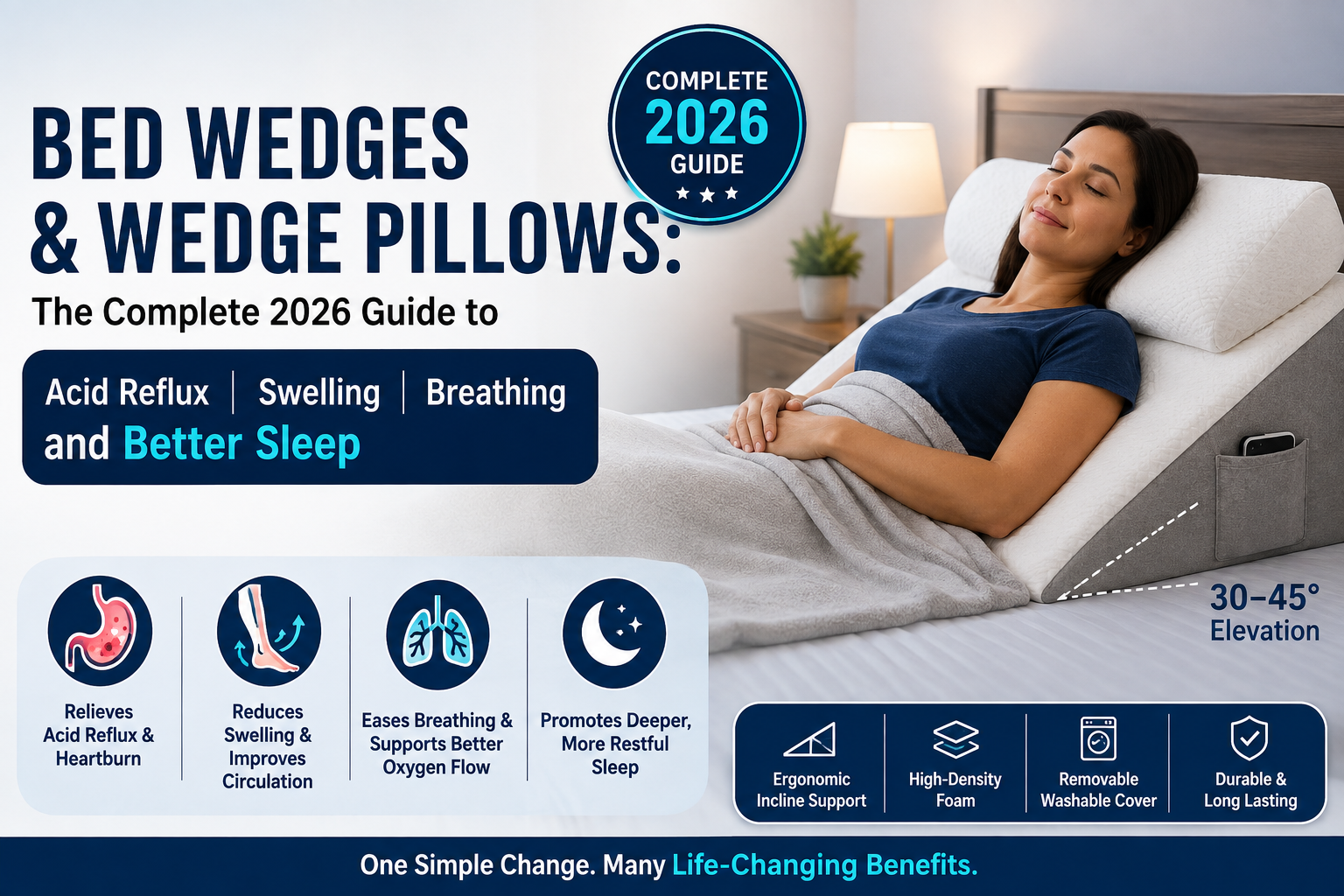
A bed wedge is a triangular block of foam that creates a stable incline on top of your mattress. Instead of bending your body at a joint the way a pillow does, it lifts a whole region — your head and torso, or your legs — along a smooth, continuous ramp. Because it is one solid piece, it holds its angle all night and doesn't shift or deflate.
Wedges come in two broad shapes for two different jobs. A head-and-torso wedge is longer and taller, designed to raise your upper body for reflux, breathing, and congestion. A leg wedge is shorter with a gentler slope and often a contoured channel, designed to elevate the legs for swelling, circulation, and back relief. Some households end up owning one of each, because they solve opposite ends of the body.
You can see the range of shapes, heights, and materials in the bed and furniture wedges collection at AllCare Store.
What a Wedge Can Help With
Acid Reflux and GERD
This is the most common reason people buy a wedge, and the one with the most support behind it. Lying flat lets stomach acid flow back into the esophagus; sleeping on an incline uses gravity to keep it down. The key is to raise the whole torso from the waist up, not just prop the head — bending at the neck does little, and bending at the waist can make things worse. A wedge that lifts the upper body along a continuous slope is the shape that works. The foam bed wedge pillow for acid reflux and snoring (about $48) is a straightforward entry point, with taller versions available for people who need a steeper angle.
Snoring and Easier Breathing
Elevating the head and chest can open the airway and reduce the soft-tissue collapse that causes snoring, and many people with congestion, a cold, or chronic respiratory conditions simply breathe more easily on a slope than flat on their back. Important caveat: a wedge is not a treatment for diagnosed obstructive sleep apnea. If you snore heavily, gasp, or stop breathing in your sleep, see a doctor — positional help is not a substitute for evaluation and, if needed, CPAP therapy.
Leg Swelling, Edema, and Circulation
For swollen ankles and feet, tired legs, or fluid pooling after a day on your feet, elevating the legs above the level of the heart helps fluid drain back toward the core. A dedicated leg elevation wedge (from about $57) holds the legs at a steady, comfortable angle far better than a pillow that flattens under their weight. Leg elevation pairs naturally with daytime compression socks for people managing chronic swelling — ask your doctor which combination fits your situation, particularly if the swelling is new or one-sided.
Back and Hip Comfort
Placing a wedge under the knees while lying on your back flattens the lower spine against the mattress and relieves the arch that aggravates many people's lower-back pain. Side sleepers sometimes use a thin wedge between the knees to keep the hips aligned. It won't fix a back problem, but for a lot of people it makes lying down tolerable.
Post-Surgery Recovery
After leg, foot, or ankle surgery, surgeons routinely ask patients to keep the limb elevated to control swelling and pain — a leg wedge makes that easy to sustain overnight. After some abdominal or chest procedures, an upper-body wedge makes getting in and out of bed and breathing more comfortable. For an arm, hand, or shoulder repair, a dedicated foam arm elevator (about $41, billed under HCPCS code E0190) keeps the limb supported and raised. Always follow your surgeon's specific elevation instructions.
Pregnancy
Later in pregnancy, a gentle wedge can ease reflux and support the belly or back. Many providers advise against lying flat on the back in the third trimester; a slight incline or side-lying position with a small wedge can be more comfortable. Check with your obstetric provider on positioning.
The Types of Wedges
| Type | What It Does | Best For |
|---|---|---|
| Head & torso wedge | Raises the upper body on a continuous slope | Acid reflux, snoring, congestion, breathing |
| Leg elevation wedge | Lifts and cradles the legs above heart level | Swelling, edema, circulation, post-surgery |
| Under-knee wedge | Flattens the lower spine while back-sleeping | Lower-back and hip comfort |
| Folding / adjustable wedge | Changes angle or folds flat for travel/storage | People who want multiple angles or portability |
| Arm elevator wedge | Supports and raises an arm or hand | Post-op hand, wrist, or shoulder recovery |
Choosing the Right Height and Angle
Height is the decision people get wrong most often. Too low and it does nothing; too high and you slide down all night or wake with a stiff neck. Wedges are usually described by their peak height in inches, which corresponds roughly to an incline angle.
| Peak Height | Approx. Incline | Typically Used For |
|---|---|---|
| 4–5 inches | Gentle | Mild reflux, light snoring, general comfort |
| 6–8 inches | Moderate | Most reflux and breathing needs; leg elevation |
| 10–12 inches | Steep | Stubborn reflux, significant congestion, on a doctor's advice |
A few practical rules. For reflux, most people do well in the 6-to-8-inch range; go higher only if a lower wedge isn't enough. For leg elevation, aim to get the ankles above the heart, which usually means a 6-to-10-inch wedge depending on your size. Length matters as much as height for a torso wedge — a longer ramp (24 inches or more) supports the whole back instead of jackknifing you at the waist. If you're between sizes or unsure, start lower; you can always add a thin layer, but you can't shrink a wedge that's too steep to sleep on.
Foam and Materials
The feel and longevity of a wedge come down to its foam. A denser polyurethane base holds its shape and supports weight without bottoming out — essential for a torso wedge that carries your upper body all night. Some wedges add a memory-foam top layer for pressure relief and a softer surface. Cheaper wedges made of low-density foam feel fine in the store and compress into uselessness within months, so density matters more than the marketing.
A removable, washable cover is worth insisting on, especially where reflux, incontinence, or wound drainage is part of the picture. Keeping the foam itself clean and dry extends its life and its hygiene. Browse covers and firmness options within the wedges collection and the broader beds and bedding collection.
Wedge Products at AllCare Store
- Foam Bed Wedge Pillow (acid reflux & snoring) — firm polyurethane incline, 24" x 24", starting around $48, with taller 7", 10", and 12" options for a steeper angle. The everyday choice for upper-body elevation.
- Alex Orthopedic Leg Elevation Wedge — contoured foam leg wedge from about $57 (6") up to about $98 (10"), for swelling, circulation, and post-surgery leg elevation.
- McKesson Carter Arm Elevator — freestanding foam arm/leg elevator, about $41, latex-free and US-made (HCPCS E0190), for post-op hand, wrist, or shoulder support.
Prices are current at the time of writing and may change.
Wedge vs. the Alternatives
| Option | Typical Cost | Trade-offs |
|---|---|---|
| Foam bed wedge | $40–$130 | Fixed angle; simple, affordable, reliable |
| Stacked pillows | $0 | Bends the body, slides apart, can worsen reflux |
| Adjustable bed base | $800–$3,000+ | Infinitely adjustable but expensive and permanent |
| Hospital bed | $500–$4,000 | Full positioning for medical needs; see our guide |
| Bed risers (head of bed) | $20–$50 | Tilts the whole bed; affects a sleeping partner |
For most people, a wedge is the right first step: it costs little, needs no installation, and solves the specific problem. If you find you need to change the angle frequently, or you're managing a medical condition that requires full positioning, an adjustable base or a hospital bed for home use may be the better long-term answer. And if the hard part of the night is actually getting out of a low bed or chair, a lift chair may do more than any wedge.
Using a Wedge Safely and Comfortably
- Give it a week. Sleeping on an incline feels strange at first. Most people adjust within a few nights; don't judge it after one.
- Stop the slide. If you slither down a torso wedge, add a small pillow or a low under-knee wedge to "anchor" your hips, or choose a longer wedge with a gentler slope.
- Mind your neck. Your head should rest naturally on the wedge's slope, not be pushed forward by an extra pillow piled on top. A thin pillow at most.
- Don't over-elevate the legs without advice. For most people leg elevation is helpful, but if you have heart failure or circulation disease, ask your doctor how high and how long.
- Keep it clean and dry. Use the washable cover, and let foam air out. Moisture is the enemy of foam and skin alike — see our guide to pillows and positioning for neck comfort for related tips.
- Replace tired foam. When a wedge no longer springs back or you're bottoming out on the mattress, it has stopped doing its job. Good foam lasts a few years of nightly use.
Does Insurance or Medicare Cover a Bed Wedge?
Usually not. A standard comfort wedge for reflux or general sleep is considered a comfort or convenience item, and Original Medicare and most insurers do not cover it. There are narrow exceptions: certain positioning and elevation devices prescribed as part of medical treatment — for example, an arm/leg elevator billed under a code like E0190 — may be covered when a physician documents medical necessity and you use an enrolled supplier. A wedge is also typically an eligible HSA or FSA expense, which for many buyers is the simplest way to save. If a wedge is part of a treatment plan, ask your doctor for documentation and check with your plan before you buy.
Frequently Asked Questions
What height wedge is best for acid reflux?
Most people do well with a 6-to-8-inch peak height, which raises the whole upper body on a gentle-to-moderate slope. Go steeper (10–12 inches) only if a lower wedge isn't controlling symptoms, ideally on your doctor's advice. Choose a wedge long enough (about 24 inches or more) to support your back so you aren't bent at the waist.
Is a wedge pillow better than stacking regular pillows?
Yes, for elevation. Stacked pillows bend you at the neck or waist, slide apart during the night, and can actually worsen reflux by compressing the abdomen. A wedge holds a continuous, stable slope all night and supports the whole region evenly.
Can a wedge pillow help with sleep apnea?
Elevation may reduce snoring and help some people breathe more easily, but a wedge is not a treatment for diagnosed obstructive sleep apnea. If you snore loudly, gasp, or stop breathing during sleep, see a doctor — you may need a sleep study and CPAP therapy.
How high should I elevate my legs for swelling?
The goal is to get your ankles above the level of your heart, which usually means a 6-to-10-inch leg wedge depending on your size. If leg swelling is new, painful, or only on one side, see a doctor before elevating, as it can signal a clot or other condition.
Will I slide down the wedge at night?
You can, if the wedge is too steep or too short. A longer wedge with a gentler slope, a non-slip cover, or a small under-knee support to anchor your hips all help. Starting with a moderate height also reduces sliding.
What is a bed wedge made of, and how long does it last?
Most are dense polyurethane foam, sometimes with a memory-foam top layer and a washable cover. A quality, high-density wedge holds its shape for several years of nightly use; low-density foam compresses and should be replaced sooner.
Can I use a wedge during pregnancy?
Many people use a gentle wedge in pregnancy for reflux or to support side-lying, since lying flat on the back is often discouraged later in pregnancy. Check positioning with your obstetric provider.
Can one wedge be used for both my head and my legs?
A single moderate wedge can serve either purpose on different nights, but the ideal shapes differ: torso wedges are longer and taller, leg wedges are shorter and contoured. People who need both regularly usually find it worth owning one of each.
The Takeaway
A bed wedge doesn't cure reflux, stop sleep apnea, or fix a bad back. What it does is reposition your body so gravity works with you instead of against you — and for a lot of people, that single change is the difference between a broken night and a whole one. Choose the right height for the job, buy dense foam with a washable cover, give yourself a week to adjust, and check with your doctor if you're using elevation to manage a medical condition.
Marie still watches her late dinners. But she hasn't stacked a pillow in a year.
Find the Right Wedge for Your Situation
AllCare Store carries bed wedges for reflux and breathing, leg elevation wedges for swelling and recovery, under-knee and arm-elevation wedges, and the washable covers that go with them. Everything ships free within the U.S. with 30-day returns.
Not sure which height or shape fits your needs? Call 1-888-889-6260 to talk it through with a specialist, or browse the bed and furniture wedges collection and the wider beds and bedding collection to compare options.
This guide was written and reviewed by the AllCare Store editorial team. Product pricing and coverage rules change — verify current details with your supplier and insurer. For personalized medical advice, consult your physician.
MEDICAL DISCLAIMER: This article is for general information only and is not a substitute for professional medical advice, diagnosis, or treatment. Nighttime symptoms like reflux, breathlessness, snoring, or leg swelling can be signs of conditions that need a doctor's attention — a wedge may ease a symptom without treating its cause. Talk to your physician before using elevation to manage a medical condition, especially if you have heart failure, sleep apnea, uncontrolled acid reflux, a blood clot, a recent surgery, or a wound. If you have sudden shortness of breath, chest pain, one-sided leg swelling with pain or redness, or swelling that is rapidly worsening, seek medical care promptly.