The Emergency-Room Handoff Nobody Prepares You For
Marcus is 34. He rolled his ankle playing basketball on a Thursday night, heard a sound he'd rather not describe, and by 11 p.m. he was sitting on the edge of an emergency-room bed with a fractured fifth metatarsal, a walking boot, and a pair of aluminum crutches a technician had adjusted in about forty seconds.
The instructions came just as fast: "Don't put weight on it. Keep the crutches under your arms. Follow up with ortho next week." Then the curtain opened, someone handed him a discharge sheet, and he was on his own.
By Saturday, Marcus had raw armpits, aching palms, and a new appreciation for how far away his own bathroom was. He'd been leaning on the tops of the crutches like they were designed for it. They are not. Nobody had told him that the padded top is a rest, not a weight-bearing surface, and that the whole job is supposed to be done by his hands. He was, without realizing it, on his way to a very avoidable problem — the tingling in his hands that doctors call crutch palsy.
None of what happened to Marcus was necessary. Crutches are one of the oldest and simplest mobility aids in existence, and used correctly they are safe, free your hands eventually, and get you through a recovery that would otherwise trap you on a couch. But almost nobody is taught to use them properly, and the forty-second handoff at discharge is where most of the trouble starts. This guide is the version of that conversation you should have gotten.
What Crutches Are For — and When They're the Wrong Tool
Crutches transfer weight from your legs to your upper body and hands, letting you keep weight off an injured foot, ankle, or leg while you move. They're the standard prescription after a fracture, sprain, foot or ankle surgery, or any injury where a doctor tells you to stay non-weight-bearing or partial-weight-bearing for a while.
They shine when the problem is one leg, your arms and hands are strong, and your balance is reasonably good. That describes a lot of people — a broken foot, a post-op ankle, an Achilles repair, a sprained knee.
But crutches are demanding. They burn far more energy than walking, they require real upper-body strength and coordination, and they leave you unable to carry anything in your hands. For a good number of people, something else is a better fit:
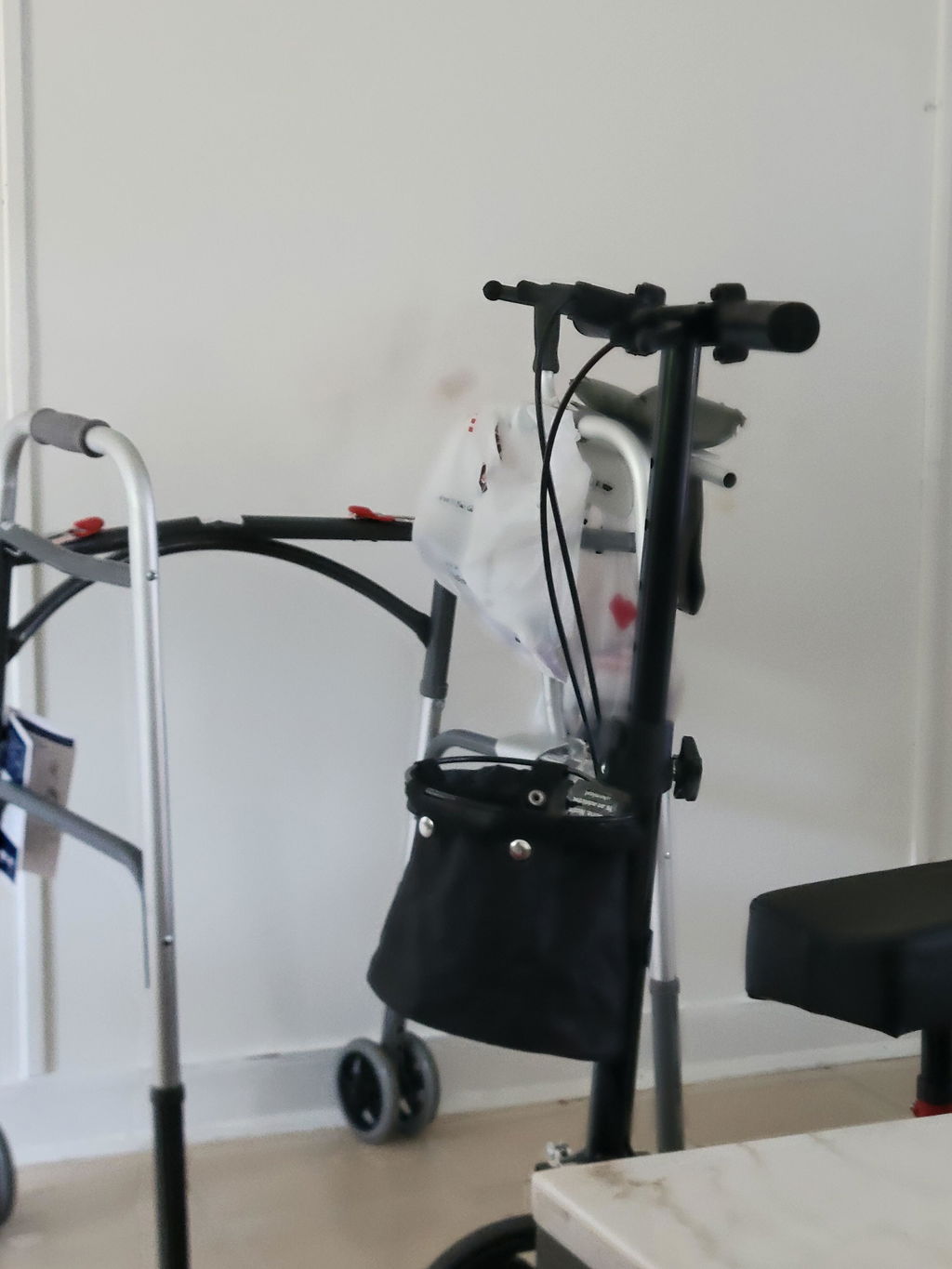
- A knee walker (knee scooter) is often far easier for a below-the-knee injury. You rest your shin on a padded platform and roll, with no armpit strain and a basket for your coffee. For many broken-foot and post-ankle-surgery patients it's the single biggest quality-of-life upgrade available.
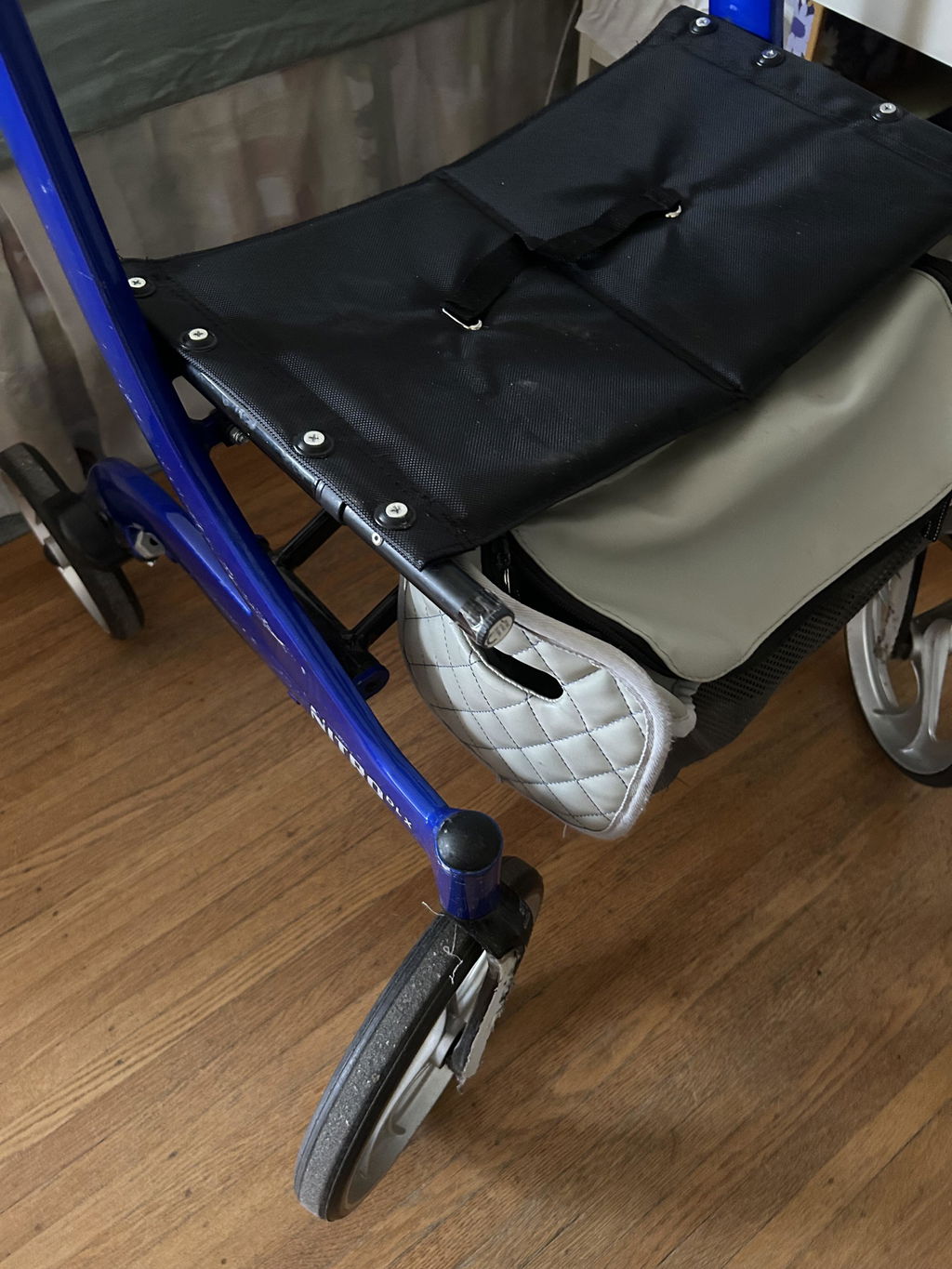
- A walker or rollator gives more stability than crutches for older adults or anyone with balance concerns, though it doesn't keep a leg fully unloaded as well as crutches do.
- A wheelchair or transport chair makes sense when both legs are involved, endurance is low, or distances are long.
- A single cane is enough once you've progressed to full weight-bearing and just need a little balance and confidence.
If you're recovering from a foot or ankle injury, it's also worth reading our guides to walking boots and post-op shoes and ankle braces, since crutches are usually one piece of a larger recovery kit.
The Types of Crutches
Most people picture one kind of crutch, but there are four in common use, and the right one depends on how long you'll need them and how much hand and arm function you have.
1. Underarm (Axillary) Crutches
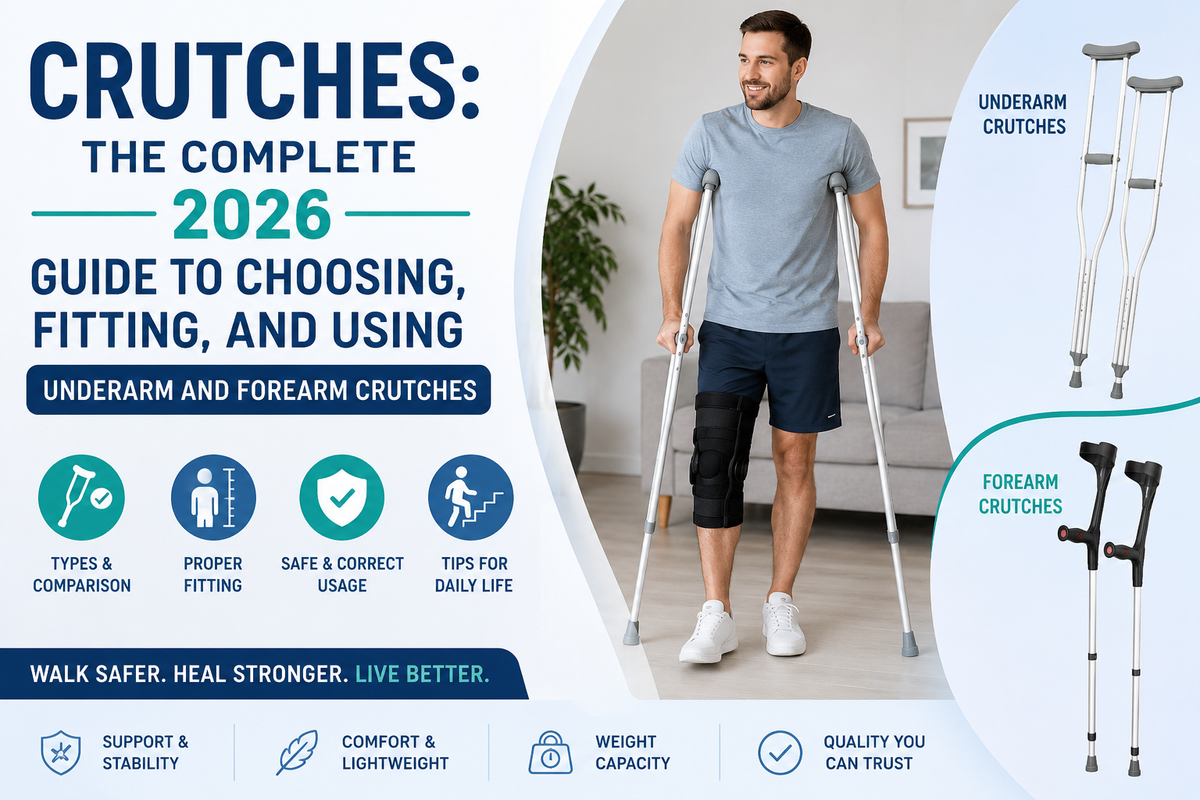
The classic pair you get at the pharmacy or emergency room. A padded top rests against the side of your rib cage below the armpit, a handgrip carries your weight, and the tip grips the floor. They're inexpensive, widely available, and excellent for short-term recovery from an acute injury. Modern versions like these push-button adjustable aluminum crutches (around $52) are lightweight, adjust in seconds, and come in sizes from youth to tall adult.
Best for: short-term use after a fracture or surgery, in otherwise strong, coordinated adults.
Watch out for: the temptation to lean on the underarm pads, which is exactly what you must not do.
2. Forearm (Lofstrand) Crutches
These have a cuff that wraps around the forearm and a handgrip, with no underarm piece at all. They take more skill to learn but are more efficient, more maneuverable on stairs, and far better for long-term or permanent use — which is why people with lasting conditions like cerebral palsy, post-polio syndrome, or a permanent leg difference almost always use them. Adjustable models such as these adult forearm crutches (about $58) and the tall-adult version (about $68) let you keep the cuff, and free your hands briefly without dropping the crutch, because it stays looped on your arm.
Best for: long-term use, active users, and anyone who has to manage stairs regularly.
Watch out for: a steeper learning curve, and slightly less stability than underarm crutches at first.
3. Platform (Gutter) Crutches
Instead of a handgrip, these support the weight through a padded forearm trough, so the load goes through your forearm rather than your wrist and hand. They're the answer for people who can't bear weight through the wrist or grip a handle — severe arthritis, a wrist injury, or a hand deformity. They're usually arranged as an attachment on a frame or walker rather than a standalone crutch.
Best for: wrist or hand conditions that make gripping painful or impossible.
4. Hands-Free and Knee-Platform Alternatives
Strictly speaking these aren't crutches, but they solve the same problem. A hands-free single-leg crutch straps to the thigh and shin for below-the-knee injuries, and a knee walker replaces crutches entirely for many people. Both keep your hands genuinely free, which matters more than you'd expect when you're trying to carry a plate across a kitchen.
Comparison at a Glance
| Type | Best Use | Learning Curve | Typical 2026 Price |
|---|---|---|---|
| Underarm (axillary) | Short-term injury recovery | Low | $40–$90 |
| Forearm (Lofstrand) | Long-term or active use | Moderate | $55–$150 |
| Platform (gutter) | Wrist/hand conditions | Moderate | $65–$200 |
| Bariatric / heavy-duty | Higher weight capacities | Low | $150–$260 |
You can compare styles, sizes, and weight capacities in the crutches and canes collection and the wider mobility aids collection at AllCare Store. If your weight is above a standard crutch's rating, look specifically for a heavy-duty or bariatric pair rather than pushing a standard set past its limit.
Fitting Crutches: The Part Everyone Gets Wrong
A crutch that's the wrong height isn't just uncomfortable — it's the direct cause of the two most common crutch injuries: nerve damage under the arm and wrist strain in the hands. Fitting takes two minutes and it's the most important thing in this article. Do it wearing the shoes (or the walking boot) you'll actually be using.
Underarm Crutches: Two Adjustments
Overall height. Stand up straight with the crutch tips resting about two inches out to the side and about six inches in front of your feet. The top pad should sit roughly one and a half to two inches below your armpit — about two finger-widths. There should be a visible gap. Your armpit should never rest on the pad.
Handgrip height. With your arms hanging relaxed at your sides, the handgrip should line up with the crease of your wrist. When you then grip the handle, your elbow should be bent about 15 to 30 degrees. That slight bend is what lets your arms — not your armpits — do the lifting.
Forearm Crutches: Two Adjustments
Cuff position. The arm cuff should sit about one to one and a half inches below your elbow, on the meaty part of the forearm. Too high and it pinches the elbow; too low and it slides off.
Handgrip height. As with underarm crutches, the grip should meet your wrist crease when your arm hangs relaxed, producing that same 15-to-30-degree elbow bend when you hold it.
The Armpit Mistake That Causes Nerve Damage
This deserves its own heading because it sends people back to the doctor every day. The underarm pad is not a shelf to hang your body from. Resting your weight in your armpits compresses the bundle of nerves that runs through there, and over days that pressure can cause crutch palsy — numbness, tingling, or weakness in the hand and wrist that can take weeks to resolve.
The rule is simple and worth repeating to yourself for the first week: your hands carry your weight, your armpits only steady the crutch. Keep a gap under your arms at all times. Squeeze the crutches gently against your rib cage with your upper arms for control, and press down through the handgrips to move. If your palms get sore, that's uncomfortable but normal; padded crutch grips and hand pads help. If your armpits get sore, you're doing it wrong and risking a nerve.
How to Actually Walk on Crutches
Once the fit is right, the movement is a rhythm you can learn in a hallway in ten minutes. The exact pattern — called a gait — depends on how much weight your doctor allows on the injured leg.
Non-Weight-Bearing (the injured leg never touches down)
- Stand with weight on your good leg, crutches at your sides.
- Move both crutches forward about one arm's length, keeping the injured foot up behind you.
- Press down through your hands — not your armpits — and swing your good leg forward to meet or pass the crutches.
- Land on your good foot, steady yourself, and repeat.
Take smaller steps than feel natural at first. Look ahead, not down at your feet.
Partial-Weight-Bearing (some weight allowed on the injured leg)
Move both crutches and the injured leg forward together, letting the injured foot bear only the amount of weight your doctor specified, then step through with the good leg. Physical therapists call this a three-point gait. A two-point gait — one crutch and the opposite leg moving together — comes later, once you're steadier.
Sitting Down and Standing Up
Back up until you feel the chair against your good leg. Move both crutches into the hand on your injured side and hold them by the grips. Reach back for the armrest or seat with your free hand, and lower yourself slowly using the good leg. To stand, reverse it: push up with the good leg and the armrest, then take the crutches once you're steady. Never try to stand or sit while still balancing on both crutches.
Stairs: The One Rule to Memorize
Stairs are where crutch accidents happen, and there's a single phrase that keeps you safe: "Good goes up, bad goes down."
- Going up: lead with your good leg onto the higher step, then bring the crutches and the injured leg up to meet it.
- Going down: lead with the crutches and your injured leg onto the lower step, then bring the good leg down.
If there's a handrail, use it: put both crutches in the outside hand, hold the rail with the other, and go one step at a time. Until you're confident, come down stairs seated, one step at a time, or ask for help. There is no prize for rushing a staircase on crutches.
Does Medicare Cover Crutches? What It Costs in 2026
Yes. Crutches are covered under Medicare Part B as durable medical equipment (DME) when your doctor prescribes them as medically necessary for use in your home. The relevant billing codes are E0110 (a pair of forearm crutches), E0112 (wood underarm crutches), and E0114 (aluminum or other non-wood underarm crutches).
After you've met your annual Part B deductible, Medicare pays 80% of its approved amount and you pay the remaining 20% coinsurance. Crutches are inexpensive equipment, so the approved amount is modest — often well under $100 for a pair — which means your out-of-pocket share is usually just a few dollars. To have a claim covered, buy from a Medicare-enrolled supplier that accepts assignment, and make sure your physician's order is on file.
Honest math: because crutches are so cheap, many people simply pay out of pocket rather than deal with paperwork for a $10 to $20 reimbursement. Where the coverage conversation really matters is for the bigger-ticket recovery items that often accompany crutches — a knee walker, a wheelchair, or a hospital bed. Medicare rules and fee schedules change and vary by region, so verify current coverage with your plan before you buy.
| Option | Typical Cost | Makes Sense When |
|---|---|---|
| Aluminum underarm crutches | $40–$90 | Short-term injury recovery |
| Forearm crutches | $55–$150 | Long-term or active use |
| Bariatric / heavy-duty crutches | $150–$260 | User weight above standard ratings |
| Knee walker (alternative) | $120–$300 | Below-the-knee injury, easier daily use |
Prices shown are typical 2026 market ranges; specific product prices quoted in this article were current at the time of writing and may change.
Accessories That Make Crutches Bearable
The crutches themselves are the cheap part. A few small add-ons make the difference between a miserable two weeks and a manageable one:
- Cushioned underarm pads and hand grips. The factory foam is thin. Softer replacement pads and grips take pressure off your palms and ribs and are the first upgrade most people wish they'd bought on day one.
- Fresh rubber tips. The tip is the only thing between you and the floor. Worn, hardened, or cracked tips slip — replace them the moment the tread looks smooth. Larger-diameter tips add grip on hard floors.
- A crutch pouch or bag (around $46) so you can carry a phone, keys, or a water bottle when both hands are occupied. This solves the single most frustrating problem of crutch life: you cannot carry anything.
- A knee walker for home and crutches for stairs and tight spaces. Many people use both.
Browse pads, grips, tips, and bags in the crutches and canes collection.
Staying Safe at Home on Crutches
- Clear the floor. Loose rugs, cords, pets, and clutter are the top causes of crutch falls. Create wide, clear pathways through the rooms you use most before you need them.
- Wear one supportive, non-slip shoe. A flat, closed, grippy shoe on your good foot beats a sock or slipper every time. See our non-slip footwear guide.
- Watch for wet floors. Bathrooms and kitchens are the danger zones. Move slowly, and consider a shower chair and grab bars during recovery.
- Rest before you're exhausted. Crutch-walking is genuinely tiring. Fatigue is when technique slips and falls happen. Sit down before you have to.
- Keep a phone or medical alert device on you, not across the room, especially if you live alone.
- Set up a recovery station. Keep water, medications, chargers, and the remote within arm's reach of where you'll spend most of your day, so you make fewer trips.
Does Medicare pay for crutches?
Yes. Medicare Part B covers crutches as durable medical equipment when prescribed as medically necessary, paying 80% of the approved amount after your deductible, with you responsible for the 20% coinsurance. Because crutches are inexpensive, the out-of-pocket difference is small, so many people simply buy them directly.
How long will I need to use crutches?
It depends entirely on your injury and your doctor's weight-bearing plan — anywhere from a couple of weeks for a mild sprain to two months or more after surgery. Follow your physician's or physical therapist's timeline; progressing too early can set your recovery back.
Can I use just one crutch?
Sometimes, later in recovery, once you're allowed to bear weight and mainly need help with balance. Use the single crutch on the side opposite the injured leg. Early on, when you must keep weight off the leg entirely, you need the pair. Ask your therapist before dropping to one.
What's the weight limit on crutches?
Standard aluminum crutches are typically rated to around 250–300 pounds. If you're above that, choose heavy-duty or bariatric crutches built for higher capacities rather than pushing a standard pair past its rating. Check the specific model's stated limit before you buy.
The Takeaway
Crutches look primitive, and that's deceptive: used well they're safe and effective, and used badly they cause raw armpits, sore hands, and the occasional pinched nerve. Almost everything that goes wrong traces back to two things nobody explains at discharge — set the height so there's a gap under your arms, and carry your weight through your hands, never your armpits.
Get the fit right, learn the stair rule, clear your floors, and honestly ask whether a knee walker would serve you better for daily life at home. Do that, and the few weeks on crutches become a manageable chapter instead of the hardest part of your recovery.
Need Help Choosing Crutches or a Knee Walker? Let's Talk.
AllCare Store carries underarm and forearm crutches, heavy-duty and bariatric models, knee walkers, walkers, rollators, wheelchairs, and all the pads, grips, tips, and bags that go with them. Start with the crutches and canes collection or the wider mobility aids collection to compare options.
Call 1-888-889-6260 to speak with a specialist about sizing, weight capacity, and whether crutches or a knee walker is right for your recovery, or visit AllCareStore.com to browse the full range. Free U.S. shipping, discreet packaging, and 30-day returns on every order.
This guide was written and reviewed by the AllCare Store editorial team. Fitting guidance, coverage rules, and product pricing change over time — verify current details with your clinician, your insurer, and your supplier. For personalized medical advice, including your specific weight-bearing status, consult your physician or licensed physical therapist.
MEDICAL DISCLAIMER: This article is for general information only and is not a substitute for professional medical advice, a physician's evaluation, or physical therapy. How much weight you may safely put on an injured leg, which type of crutch is right for you, and how long you should use one all depend on your specific injury or condition. Always follow the weight-bearing instructions and fitting guidance given by your doctor or licensed physical therapist. If you experience new numbness or tingling in your hands or arms, worsening pain, sudden weakness, a fall, or signs of a blood clot such as calf swelling, warmth, or redness, seek medical attention promptly.