This article is for general information only and is not medical advice. Talk with your doctor or a continence nurse about new or changing bladder symptoms.
Nighttime is the hardest shift in incontinence care. During the day you can change products on a schedule, notice early warning signs, and reach a bathroom in time. At night everything works against you: the body lies flat, the bladder fills for hours without a break, and the person wearing the product is — ideally — fast asleep. A routine that works perfectly all day can still end in wet sheets at 3 AM.
Here is the good news: dry nights rarely come from finding one magic product. They come from a system — a true overnight product backed up by layered bed protection, an evening fluid routine that does not cause dehydration, a change strategy that protects sleep, and a skin routine built for long wear. This guide walks through that system piece by piece.
Why Leaks Happen at Night, Even in a Good Product
Lying down changes where urine goes
Absorbent products are engineered around gravity. When you stand or sit, urine hits the center of the pad, where the absorbent core is thickest, and soaks straight down. When you lie flat, that same urine flows along the body instead — backward toward the lower back in back sleepers, or pooling along one hip in side sleepers. It reaches the edges of the product where there is less absorbent material, and the leg openings and waistband become the low points where liquid escapes. This is why a product that never fails in a recliner can leak in bed at half its rated capacity.
The bladder is busier at night than you might expect
Many older adults produce a large share of their urine overnight, a pattern doctors call nocturnal polyuria. Fluid that settled in the legs during the day re-enters circulation once a person lies down, and the hormone signal that normally slows urine production during sleep weakens with age. Some medications — diuretics taken late in the day in particular — add to the load. The result is more volume arriving over eight hours than many standard products are designed to hold.
Deep sleep hides the warning signs
Awake, the first bladder signals arrive early enough to act on. In deep sleep, those signals may not wake a person at all, or may wake them only after the bladder has already emptied. This is a normal feature of sleep, not carelessness — and it means a nighttime plan cannot depend on waking up in time. The plan has to assume the void will happen in bed and be ready for it.
Eight to ten hours is simply a long time
Even a modest, steady loss adds up across a full night. A product comfortably within its limits at hour three can be saturated by hour seven — and once the core is saturated, it stops absorbing. Everything that arrives after that point runs off.
Evening Fluids: Shift the Timing, Don't Restrict
The natural instinct is to stop drinking after dinner. Done too aggressively, this backfires. Dehydration concentrates urine, which irritates the bladder and can actually worsen urgency; it also raises the risk of urinary tract infections, constipation, and dizziness — a genuine safety issue for frail older adults. The goal is to move fluids earlier in the day, not remove them:
- Front-load the day. Encourage most drinking in the morning and early afternoon, when it is easiest to manage.
- Taper after dinner rather than stopping. Small sips for thirst and medications are fine; skip the large glass of water at bedtime.
- Move caffeine to the morning. Coffee, tea, and cola are mild diuretics and bladder irritants for many people.
- Be careful with evening alcohol. It increases urine production and deepens early-night sleep — a difficult combination for staying dry.
- Ask about medication timing. If a diuretic ("water pill") is scheduled in the evening, ask the prescriber whether it can safely move earlier in the day. Never change a medication schedule on your own.
- Double void before bed. One bathroom trip at the start of the wind-down routine and a second right before lights-out empties the bladder more completely than a single visit.
The 3-Layer Bed Protection System
Experienced caregivers do not rely on the product alone. They build three layers of defense, so that one heavy night means a two-minute pad change instead of remaking the entire bed:
| Layer | What It Is | What It Does |
|---|---|---|
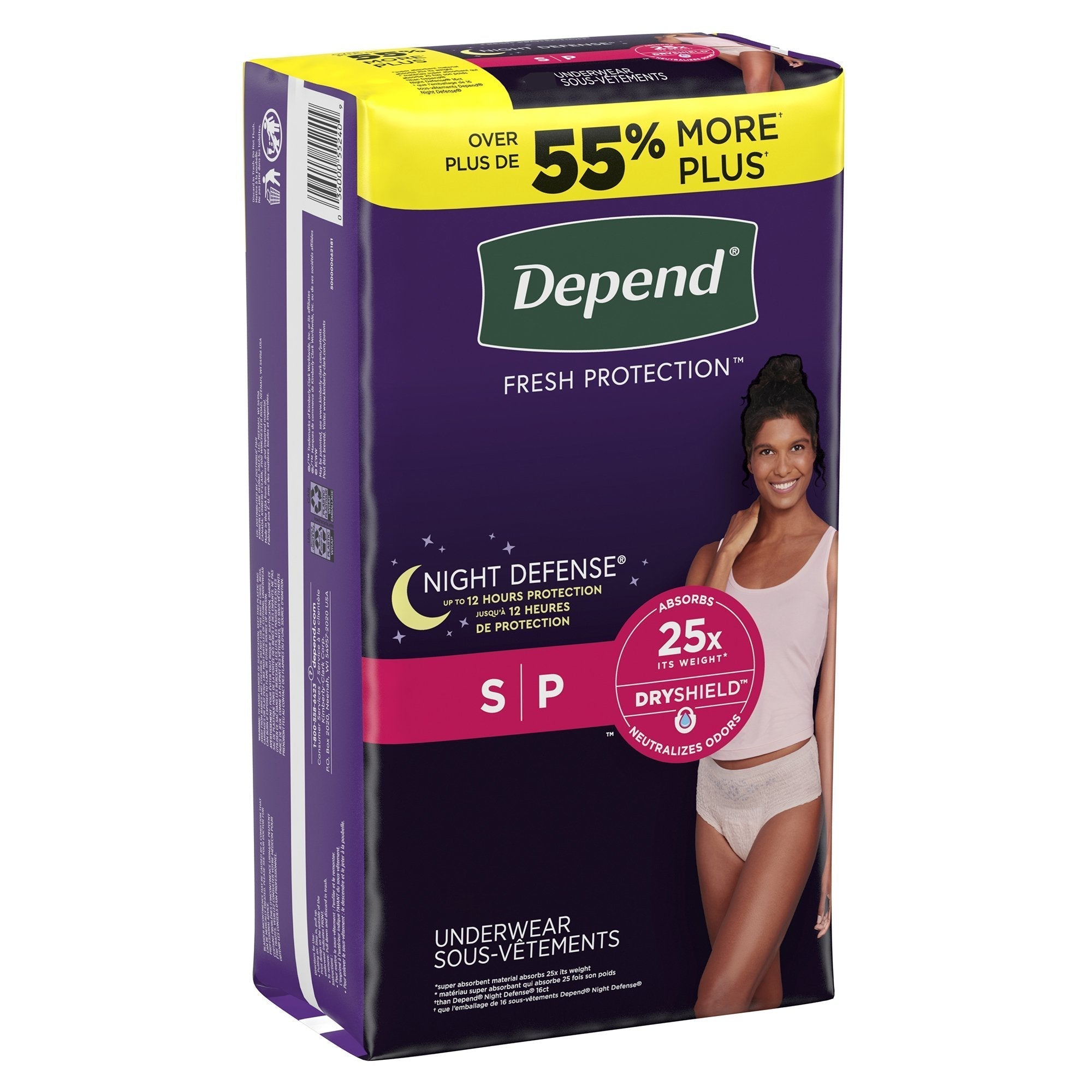
| 1. Overnight product | Brief or underwear rated for overnight wear | Absorbs the void itself — the primary defense |
| 2. Booster pad | Flow-through insert placed inside the product | Extends capacity and catches position-related leaks |
| 3. Underpad + mattress protector | Absorbent pad on the sheet, waterproof layer under it | Keeps bedding and mattress dry when layers 1–2 are overwhelmed |
Layer 1: A true overnight product
Use a product actually rated for overnight wear — a step up in capacity from the daytime version, not the same daytime product worn longer.
Layer 2: A booster pad inside it
Booster pads are absorbent inserts without a waterproof backing. Placed inside the brief or underwear, they absorb first, then let overflow pass through to the main core — a meaningful capacity extension for heavy wetters and side sleepers. One important warning: never layer a second full diaper inside or over the first. The waterproof backing of the inner product blocks absorption and channels urine straight out the leg openings.
Layer 3: Protect the bed itself
Place an underpad — disposable or washable — over the bottom sheet under the hips, and fit a waterproof mattress protector under the sheet. When a leak does get through, you swap an underpad and draw sheet in minutes, in dim light, instead of stripping the bed at 3 AM. Browse underpads and bedding protection for both options.
What to Look For in an Overnight Product
We keep detailed product picks in one place so this guide can stay focused on the routine — see our maximum protection guide for heavy incontinence for specific overnight-capable briefs and underwear. When you compare options, a short checklist covers what matters at night:
- Overnight-rated capacity — the packaging should specifically claim overnight or 8-hour protection, a level above the same brand's daytime line.
- Standing leg gathers (leak guards) — vertical inner cuffs along the leg openings that block sideways flow. The single most important feature for side sleepers.
- Generous rear coverage — a taller back panel protects back sleepers, where supine flow heads first.
- Wetness indicator — an outside stripe that changes color, letting a caregiver check saturation at a glance without fully waking the sleeper.
- Refastenable tabs — tab-style briefs can be opened, checked, and re-closed, and generally offer the highest capacities for nighttime use.
Above all, get the size right. A high-capacity product that gaps at the thigh will leak long before it is full — poor fit causes more nighttime leaks than insufficient absorbency. Start with our guide to choosing the right size, then browse the full range of adult diapers, protective underwear, and more.
A Nighttime Change Strategy That Protects Sleep
Fragmented sleep hurts everyone — the person being cared for and the caregiver doing the caring. The aim is the fewest possible interruptions, each one as short, quiet, and dark as possible.
- Decide between "scheduled" and "as-needed." If the product reliably lasts the night, do not wake anyone — change on waking. If it reliably does not, one planned change timed just before the heaviest part of the night beats reacting to a soaked bed later.
- Piggyback on natural wake-ups. If the person already stirs for a bathroom trip or repositioning, that is the moment to check the wetness indicator.
- Keep light low. Use a dim nightlight or low-lumen lamp rather than the room light; bright light makes it much harder for both of you to fall back asleep.
- Stage supplies at the bedside. Fresh product, wipes, barrier cream, disposal bag, spare underpad, spare draw sheet — all within arm's reach, in the order you will use them.
- Change in place when you can. With tab-style briefs and the side-rolling technique, a caregiver can change a product without the person leaving the bed — quieter, faster, and safer than a walk to the bathroom.
- Keep it boring. No conversation, no screens, minimal fuss. The message to a half-asleep brain should be: nothing is happening, go back to sleep.
The Overnight Skin Routine
Eight or more hours of warmth and moisture is the hardest thing skin faces in incontinence care. A simple routine prevents most problems.
Before bed
- Cleanse the area with a gentle, pH-balanced cleanser or incontinence wipes — no harsh soap.
- Pat dry (never rub) and allow a few minutes of air time.
- Apply a thin, even layer of barrier cream — zinc oxide or dimethicone based — over all skin the product will cover.
In the morning
- Cleanse again and inspect the skin in good light.
- Look for redness that does not fade within about half an hour, broken or weeping skin, or a pimply rash in the skin folds (a possible fungal infection).
- Allow air time before dressing, then apply fresh barrier cream for the day.
Persistent redness, open skin, or a spreading rash deserves a call to the doctor or wound nurse. Early treatment is quick; late treatment is not.
A Laundry Workflow That Keeps Accidents Small
- Make the bed in layers. Mattress protector, fitted sheet, then a washable underpad or draw sheet on top. Some caregivers double up — sheet, underpad, sheet, underpad — so a 3 AM strip-down takes seconds, not minutes.
- Rinse before it sits. Cold-rinse wet linens as soon as practical; a lidded bucket or hamper with a splash of white vinegar controls odor until wash time.
- Wash with an enzyme detergent. Enzyme-based detergents break down urine residue better than fragrance can cover it. Wash warm, and skip fabric softener on underpads — it coats the fibers and reduces absorbency.
- Protect waterproof layers. Wash mattress protectors and washable underpads according to their labels and dry on low heat; high heat cracks waterproof backings.
- Keep two spare sets. Two full sets of sheets and underpads in the bedroom closet means no midnight laundry emergencies.
When Nighttime Wetting Needs a Doctor
Most nighttime incontinence can be managed well at home, but certain patterns deserve prompt medical attention:
- New onset. An adult who was reliably dry at night and suddenly is not. An abrupt change can signal a urinary tract infection, poorly controlled diabetes, a medication effect, or another treatable cause.
- Pain, burning, or fever. Painful urination, foul-smelling or cloudy urine, or fever alongside new leakage points toward infection.
- Blood in the urine. Always worth an evaluation, even if it happens once.
- Rapidly increasing volume or new leg swelling. These can point to heart, kidney, or blood sugar issues that need attention.
- Loud snoring with gasping, plus nighttime wetting. Untreated sleep apnea can drive nighttime urine production; treating it often helps.
Frequently Asked Questions
Should I wake someone just to change them?
If the skin is healthy and the product is holding, protecting sleep usually wins — change on waking. If there is any skin breakdown, or the product is saturated well before morning, one planned dim-light change is the better trade.
Can we just use the daytime product and change more often?
At night that math rarely works, because every extra change is broken sleep for two people. A true overnight product plus a booster pad usually beats two extra daytime changes — and everyone sleeps.
How long should we trial a new overnight setup?
Give any change at least three nights before judging it, and change one variable at a time — product, booster, or fluid timing — so you know what actually helped.
Build Your Overnight System
Start with fit using our sizing guide, choose an overnight-rated product with help from our heavy incontinence protection guide, then add boosters and bed protection from our underpads and bedding protection collection and the full range of adult diapers and protective underwear — free shipping on all orders. Questions about putting a nighttime system together? Call our team at 1-888-889-6260.
Medical Disclaimer: This article is for informational purposes only and does not constitute medical advice, diagnosis, or treatment. Consult your physician or a qualified healthcare provider about nighttime incontinence, especially if symptoms are new, worsening, or accompanied by pain, fever, or blood in the urine.




